Hydronic heating — the system where a boiler heats water that circulates through baseboard radiators or in-floor tubing to warm a room — is widely considered the gold standard for thermal comfort. No blowing air, no hot-and-cold spots, quiet operation. What it doesn’t do is add moisture to the air. Forced-air furnaces get criticized for drying out a house, but the truth is any heating system raises indoor temperature without introducing humidity, which drops the relative humidity (the percentage of moisture the air holds relative to its maximum capacity at a given temperature). In a tightly built or older leaky home running a cast iron boiler all winter, indoor relative humidity can fall to 20–25% — well below the 35–50% range the ASHRAE Handbook — Fundamentals, Chapter 9 identifies as the comfort and health target for occupied spaces. The result is cracked lips, static-electric shocks, irritated sinuses, and complaints that the house “doesn’t feel warm” even when the thermostat reads 70°F.
This article is for the homeowner managing an established hydronic system — or the contractor fielding calls from them — who needs a clear-eyed comparison of passive evaporative steamers, cast iron stove-top humidifiers, and whole-house active humidifiers. We’ll size the problem, stack up the options with actual numbers, and give you a decision framework you can use this heating season.
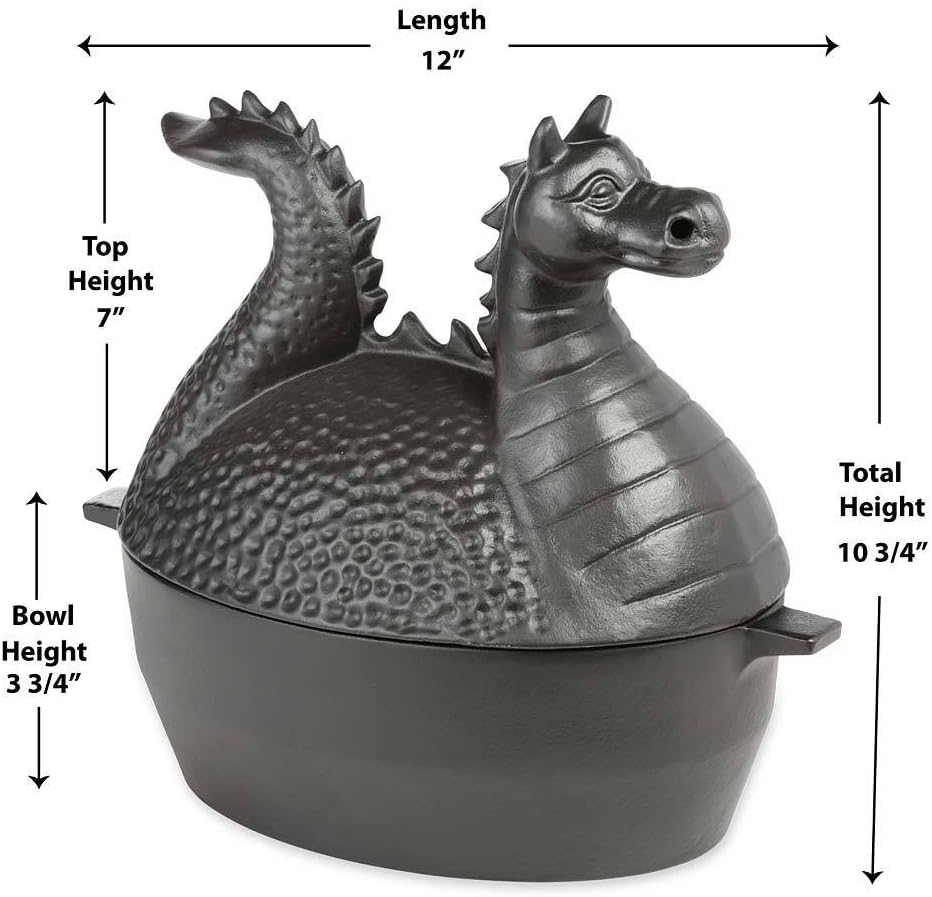
| EDITOR'S PICKPlow & Hearth Moose Wood Stove… | Mid-tierPlow & Hearth Dragon Wood Stove… | Budget pick[Panacea Products 15321 Humidify…](https://www.amazon.com/dp/B000VBDHFS?tag=greenflower20-20) | |
|---|---|---|---|
| Capacity | 3 QT | 2.75 QT | — |
| Material | Cast Iron | Cast Iron | Iron |
| Rust Resistant | ✓ | ✓ | — |
| Finish | Matte Black | Matte Black | — |
| Design Motif | Moose | Dragon | — |
| Price | $119.99 | $117.99 | $33.95 |
| See on Amazon → | See on Amazon → | See on Amazon → |
Why Hydronic Heat Creates a Dry-Air Problem (and Why It’s Worse Than You Think)
The physics here matter because they affect which solution is proportionate. When outside air at 30°F and 60% relative humidity infiltrates a house and warms to 70°F, its relative humidity drops to roughly 14–18% — even before accounting for any moisture the occupants add through breathing, cooking, or bathing. The Building Science Corporation’s BSD-013 document on relative humidity explains this as a direct consequence of the psychrometric relationship between temperature and moisture-holding capacity: warm air can hold far more water vapor, so the same absolute amount of moisture becomes a much smaller percentage of capacity.
Forced-air systems partially offset this through occupant activity: cooking steam, shower moisture, and even respiration get picked up and recirculated. Hydronic systems don’t circulate air at all, which means those incidental moisture sources stay stratified and don’t distribute evenly. In older homes with single-pane windows and balloon-frame construction, natural air infiltration adds some moisture cycling, but in energy-retrofitted homes with spray-foam and replacement windows, the problem compounds. The EPA’s Indoor Air Quality Guide on moisture and humidity flags 30% RH as the lower threshold below which respiratory irritation, increased susceptibility to airborne viruses, and wood shrinkage (floor gaps, door-frame cracks) become measurable concerns.
By the Numbers
| Outdoor Temp | Outdoor RH | Indoor Temp | Resulting Indoor RH (no added moisture) |
|---|---|---|---|
| 10°F | 70% | 70°F | ~8% |
| 30°F | 60% | 70°F | ~16% |
| 40°F | 65% | 70°F | ~24% |
Source: psychrometric calculations consistent with ASHRAE Fundamentals methodology.
The takeaway for practitioners: a home in Boston, Minneapolis, or Chicago running a cast iron boiler through January and February at set points of 68–72°F will routinely see indoor RH in the 12–22% range without intervention. That’s not a minor comfort nuisance — it’s a building envelope and occupant health issue.
Passive Options: Wood Stove Steamers and Cast Iron Radiator Humidifiers
What they are and what they actually do
Passive humidifiers are unpowered evaporative devices — they add moisture by exposing a water surface to warm air or a hot surface. Two types are relevant in hydronic-heated homes:
Cast iron radiator steamers are small vessels, often shaped like tea kettles or flat reservoirs, designed to hang or rest on hot-water baseboard radiators or steam radiator covers. They work on direct evaporation: the radiator heats the vessel, which heats the water, which evaporates. Manufacturers including Pilgrim Home and Hearth, H Potter, and Achla Designs market these as both functional and decorative.
Wood stove humidifiers are heavier-gauge cast iron or enameled steel kettles designed to sit directly on a wood stove surface where temperatures commonly reach 400–600°F. Brands like Vogelzang, Lehman’s, and US Stove Company spec these for continuous simmer on stove tops. Some contractors and homeowners place these in rooms served by radiant floor heat or cast iron radiators as a supplemental visual anchor and low-output moisture source.
The honest performance ceiling
This is where the decision math gets important. A standard radiator steamer with a 1-quart water capacity will evaporate roughly 0.5–1.5 pints of water per day depending on radiator surface temperature and air circulation. According to ACHR News reporting on humidification strategies for non-ducted heating systems, a 1,500-square-foot home at typical winter infiltration rates requires approximately 8–12 pints of moisture input per day to maintain 35% RH. That means:
- One cast iron radiator steamer covers roughly 5–15% of a typical home’s moisture deficit.
- Multiple units on every radiator can move the needle meaningfully — three to four units might cover 20–40% of the deficit in a moderately tight 1,200 sq ft home.
- A wood stove humidifier running on an active wood stove can evaporate 2–4 pints/hour at high fire, which is genuinely impactful — but only when the stove is burning, and only in the room where it sits.
The practical conclusion: passive cast iron humidifiers are real solutions for single-room management and for homeowners who want to reduce (not eliminate) the whole-house deficit without adding mechanical complexity. They are not a substitute for whole-house humidification in a tightly built home with a modern cast iron boiler running at 80%+ AFUE efficiency.
Maintenance and water quality note
Passive evaporators concentrate minerals over time. In areas with hard water (above 7 grains per gallon hardness, which covers most of the Midwest and Southwest), scale buildup in cast iron steamers can reduce evaporation rate by 30–50% within a single heating season. Owners consistently report that weekly rinse-and-refill with filtered or softened water extends useful life significantly. Fernox and Sentinel — both well-established in hydronic water treatment — do not make products specific to open-air evaporators, but their guidance on scaling in closed loop systems is directionally applicable: minerals are the enemy of cast iron surfaces exposed to repeated wet/dry cycles.
Active Whole-House Options for Hydronic-Heated Homes
When passive evaporation isn’t enough — which is most of the time in a properly weatherized home north of the 40th parallel — the conversation shifts to active humidifiers. The challenge for hydronic systems is that there’s no duct to mount a bypass or fan-powered humidifier in. That limits the field to three viable approaches:
1. Console or floor-standing evaporative humidifiers Freestanding units with internal fans, water reservoirs of 2–5 gallons, and output ratings of 8–18 gallons per day are the most common retrofit for hydronic homes. Brands including Honeywell Home, Aprilaire (standalone console models), and GeneralAire manufacture units in this category. These sit in a central location — typically a main living area — and rely on natural air circulation to distribute moisture. This Old House has covered standalone console humidifiers specifically in the context of hot-water heating system retrofits, noting that a single 12 GPD unit placed centrally is often sufficient for 1,800–2,400 sq ft with open floor plans.
2. Standalone ultrasonic humidifiers Ultrasonic units use a vibrating membrane to create a fine cool mist rather than evaporating water thermally. They’re quiet, energy-efficient, and precise. The tradeoff: they’re highly sensitive to water hardness and will deposit white mineral dust on surfaces if used with unfiltered tap water. Distilled or demineralized water is functionally required. For a hydronic home, a high-output ultrasonic (5–9 liters/day output) placed in a bedroom or living room is a targeted solution, not a whole-house one.
3. Whole-house steam humidifiers tied to the electrical panel Electrode or resistive element steam humidifiers — Aprilaire’s 800 Series, Honeywell Home’s HM750A, and Nortec’s residential units — generate steam independently of any air handler and can be plumbed to distribute moisture through a small duct stub or directly into a room. These are the highest-output and highest-cost option, with installed prices ranging from $800 to $1,800 depending on capacity and labor market. For a whole-house solution in a hydronic home, this is the practitioner-grade answer: properly sized per ASHRAE Manual J moisture load calculations, installed with a humidistat, and tied to a demand-control scheme.
Decision Framework: If X, Then Y
The goal of this section is to make the sizing and product selection decision explicit rather than leaving it at “it depends.”
If the home is under 1,000 sq ft, has older single-pane windows, and the occupant reports mild complaints: Passive cast iron radiator steamers on two or three baseboard units, combined with a single console evaporative humidifier in the main living area, are proportionate and low-maintenance. Total cost: $80–$250. Maintenance burden: weekly water refills, monthly wick or filter inspection.
If the home is 1,200–2,500 sq ft, reasonably tight (post-2000 construction or energy-retrofitted), and the occupant reports persistent static, cracked woodwork, or health complaints: A high-output console evaporative humidifier (12–18 GPD rated output) is the minimum viable solution. Budget $180–$380 for a Honeywell Home or Aprilaire console unit. Set target RH at 35% and expect the unit to run 6–10 hours per day in peak cold weather. Passive radiator steamers can supplement but won’t replace this.
If the home is over 2,500 sq ft, tightly constructed, and the contractor or homeowner wants a set-and-forget solution: Size and install a whole-house electrode steam humidifier. Use ASHRAE moisture load methodology — accounts for infiltration rate, interior moisture generation, and design outdoor conditions — to confirm capacity before specifying. Aprilaire 800 Series (rated 34.6 GPH maximum output) is the common mid-tier specification. Budget $900–$1,800 installed as of May 2026 depending on regional labor rates.
If a wood stove is the primary or supplemental heat source in one zone of a hydronic home: A cast iron stove-top kettle humidifier is a practical and proportionate tool for that specific zone when the stove is active. It won’t protect the rest of the house. Pair it with a console unit for the sleeping areas. Vogelzang and US Stove Company kettles are widely stocked at hearth retailers and available through several HVAC distributors.
A Note on Monitoring: Don’t Guess
Regardless of which solution you specify or recommend, the single most effective change a homeowner or contractor can make is installing a calibrated digital hygrometer — a device that measures relative humidity. Accurate units from Govee, Inkbird, or ThermoPro run $15–$35 and are consistently rated by owners as reliable within ±3% RH. Without a measurement baseline, humidifier output is guesswork. With one, a homeowner can confirm that the $200 console unit is actually holding the bedroom at 38% RH and adjust accordingly, or identify that the master bedroom reads 21% while the kitchen reads 44% — a distribution problem, not an output problem.
The dry-air complaint in a hydronic home is real, solvable, and frequently undersized. Cast iron radiator steamers are a legitimate part of the toolkit — just not the whole toolkit for a modern, tight building envelope. Matching the solution to the actual moisture load is the work, and it starts with a $25 sensor and fifteen minutes of reading at ASHRAE.