A switching relay — sometimes called a zone relay or hydronic switching relay — is the electrical brain that sits between your thermostat and your boiler’s circulator pump. When a thermostat in one of your home’s heating zones calls for heat, the switching relay receives that signal and closes an electrical contact, which tells the circulator pump to send hot water to that zone. Simple in theory, but these devices handle thousands of on/off cycles every heating season, and like any electromechanical component, their contacts and coils have a finite life. If you’ve started hearing a rhythmic clicking from your boiler room and your system is anywhere near the six-year mark, you’re almost certainly looking at a relay in the early stages of failure — and this article is going to tell you exactly what’s happening, how to confirm it, and what to do about it.
The Azel SP-82 and SP-83 are among the most widely installed switching relays in residential hydronic systems across the northeastern and midwestern U.S., so they anchor this discussion. But the failure physics described here apply broadly across the product category.
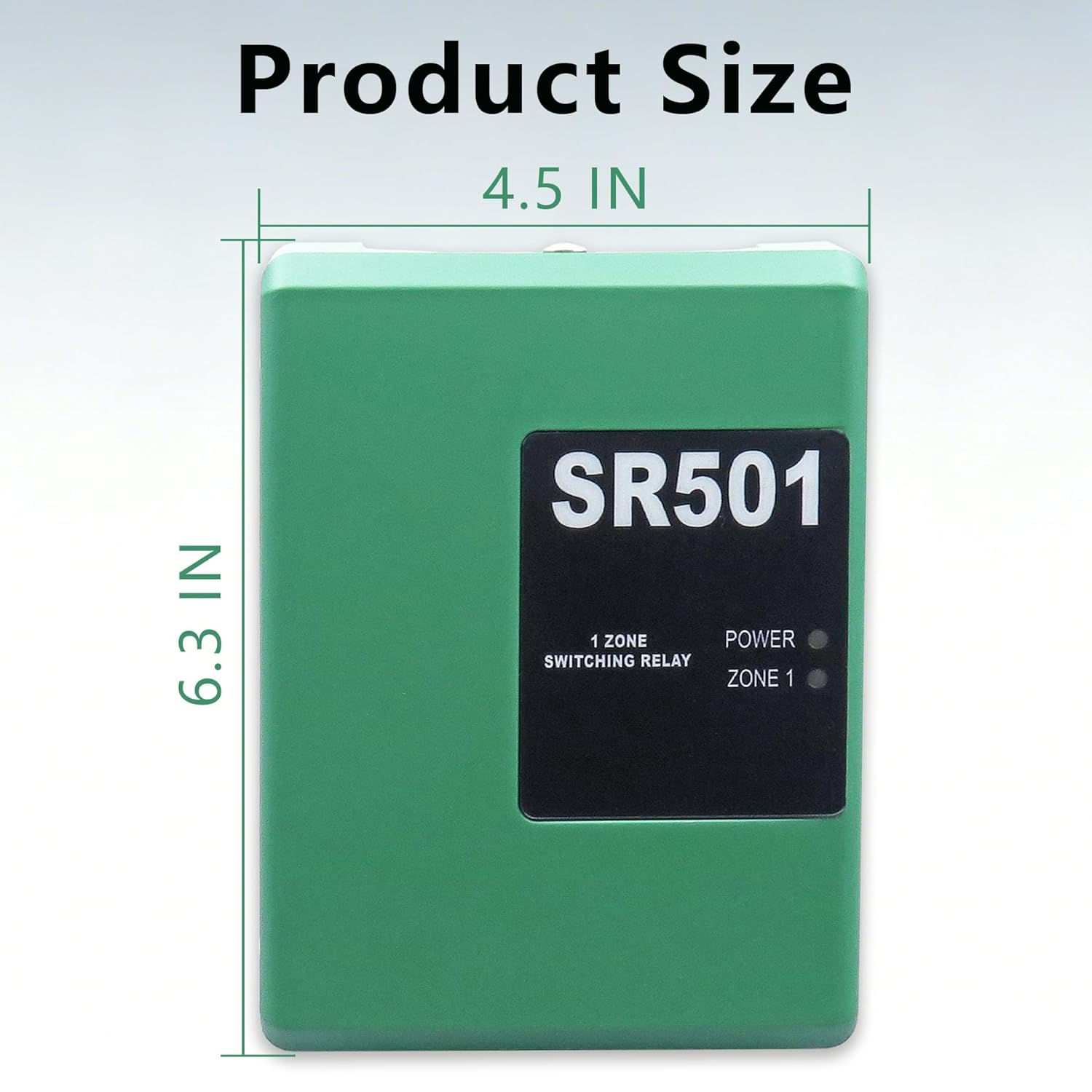
| EDITOR'S PICKAzel SP-83 Three Zone Switching… | Budget pickUpgrade SR501-4 Switching Relay | |
|---|---|---|
| Zones | 3 | 1 |
| Voltage | — | 24V |
| Compatibility | — | Taco SR501 |
| Application | Hydronic Radiant | Hydronic Heating |
| Price | $165.73 | $72.59 |
| See on Amazon → | See on Amazon → |
The Six-Year Clicking Pattern: What’s Actually Happening Inside the Relay
The clicking sound is the mechanical signature of a relay contact bouncing — opening and closing rapidly when it should be holding firmly in one position. Relay contacts are essentially tiny spring-loaded switches. Every time your thermostat calls for heat, the relay’s coil energizes, pulls the contact closed, and holds it there until the call ends. Over years of cycling, three things degrade in parallel:
- Contact surface oxidation. The copper or silver-alloy contact faces develop an oxide layer. Oxidized contacts have higher electrical resistance and less positive engagement — they chatter rather than snap.
- Spring fatigue. The return spring that snaps the contact open loses tension. A tired spring allows the contact to hover in a transitional state, producing the characteristic rapid clicking.
- Coil voltage sensitivity. As coil windings age, their impedance changes slightly. A coil that once pulled robustly at 24V AC may now struggle to hold at the low end of incoming voltage variation, causing intermittent dropout and re-engagement.
Owner reviews of the Azel SP-83 describe this failure pattern with striking consistency: clicking begins at roughly the six-year mark, and the unit typically becomes non-functional within one to two heating seasons after that first symptom. One reviewer described the arc bluntly as “death by clicking in 6 years,” and a second confirmed their unit failed on the identical timeline following professional installation. The Azel SP-82 shows a related but slightly different failure mode — reviewers report relay burn-out (a failed-open condition where the pump simply won’t activate) at approximately seven years. The difference matters diagnostically: clicking is a degrading contact; dead silence when a call is present is more often a burned coil or a fused-open contact.
By the numbers:
- Typical residential heating season: 1,800–2,400 relay cycles (thermostat calls) per zone per year
- At 6 years × 2 zones × ~2,000 cycles: approximately 24,000 contact operations per relay
- Rated mechanical life on most residential-grade relay contacts: 100,000+ operations under ideal conditions — but electrical arcing under load degrades contact life far faster than mechanical cycling alone
The gap between rated life and observed six-year failure suggests that arc erosion — the tiny electrical discharge each time a loaded contact opens — is the dominant wear mechanism, not mechanical fatigue per se. HPAC Magazine’s technical feature on switching relay wear mechanisms in multi-zone hydronic controls identifies arc erosion as the primary driver of premature contact failure in residential relay panels operating at 24V AC control voltage with 120V load-side pump circuits. The load side is where the damage accumulates.
Clicking vs. Zone Valve Chatter: Getting the Diagnosis Right
Before you pull the relay panel, rule out the other common source of hydronic clicking: the zone valve power head. A zone valve is a motorized valve installed in the supply or return line of each heating zone; its power head is a small actuator that opens and closes the valve on thermostat demand. Power heads fail in their own right — and when they do, they can produce a buzzing or clicking sound that travels through the pipe and sounds like it’s coming from the relay panel.
Here’s the diagnostic split:
Relay clicking characteristics:
- Sound originates at or inside the relay panel enclosure
- Clicking is rapid and electrical in character (not mechanical thudding)
- Occurs at the moment of thermostat call, not continuously
- May be accompanied by intermittent pump operation — pump starts and stops in bursts
Zone valve power head chatter characteristics:
- Sound tracks to a specific zone valve location, often at a manifold or in a mechanical room riser
- Typically a lower-frequency buzz or mechanical knock
- Consistent with the thermostat calling for that specific zone
- Pump may run normally; heat delivery to that zone is compromised
The field test: with the system calling for heat on a suspect zone, use your hand to dampen vibration on the relay panel enclosure. If the audible clicking stops or changes character when you touch the panel, the relay is the source. If the sound continues unchanged, trace the piping to each zone valve and listen at the actuator body. Contracting Business’s field reporting on zone control diagnostics notes that misattributing zone valve chatter to relay failure — or vice versa — is one of the more common callbacks on hydronic service calls, so taking the extra five minutes to localize the sound saves significant rework.
Repair vs. Replace: The Decision Framework
This is where the practitioner question gets real. You have two options: (a) source a replacement relay module or contact assembly and rebuild the existing panel, or (b) swap the entire unit.
The case for swapping the whole unit:
The relay is not the only component at end-of-life in a six-year-old panel. The transformer, terminal blocks, and any pilot relays have accumulated the same thermal and electrical stress. Replacing only the relay buys you an indeterminate amount of time before another component fails. Owner accounts of SP-82 and SP-83 failures consistently report that once clicking begins, total loss follows within 12–24 months regardless of interim interventions. If your panel is six-plus years old, the math usually favors replacement.
Replacement also opens a practical upgrade window. Multiple owners who replaced their SP-82 (a two-zone controller) during this failure cycle specifically noted that stepping up to the SP-83 (three-zone capacity) during the swap added a zone without any additional rough-in work — only the panel and a thermostat wire pull. If your system has any expansion potential, or if you’ve been meaning to split an oversized zone, this is the natural moment.
The case for relay-only replacement:
If the panel is under four years old and only one relay section has failed — identifiable by the fact that only one zone exhibits the clicking while others function normally — sourcing a replacement relay coil and contact assembly from Azel or a compatible industrial relay supplier can extend the panel’s life at lower cost. This is a legitimate repair if you’re comfortable with basic electrical work and the rest of the panel tests healthy with a multimeter (coil resistance within spec, transformer output holding at rated voltage under load).
If X, then Y — the decision rule:
- Panel is 5+ years old, clicking on any zone: Replace the full unit. Don’t chase individual relay failures in an aging enclosure.
- Panel is under 4 years old, one zone clicking, others normal: Relay-only repair is defensible. Test transformer output first.
- SP-82 in a home where you’ve considered adding a third zone: Replace with SP-83. The upgrade cost delta is modest; the rewiring is minimal.
- Clicking plus intermittent no-heat on the same zone: Assume contact burn-through. Full replacement.
- Dead silence (no pump activation) with a valid thermostat call: Coil failure or burned contact. Do not troubleshoot further in-season — replace immediately.
Replacing the Unit: The One Step You Cannot Skip
Owner accounts across SP-82 and SP-83 replacement threads are unanimous on one procedural point: photograph every wire connection before you touch anything. This isn’t generic advice — it’s the single step that separates a clean 45-minute swap from a three-hour rewiring session. Hydronic switching relay panels accumulate field modifications over their lives: added zones, zone valve end-switches, priority relay wiring, external pump contacts. None of that will be in the installation diagram for your replacement unit.
The photograph discipline applies to both sides of every terminal block — the 24V thermostat side and the 120V load side. Label the photo with zone identification before you disconnect. ACHR News’s feature on hydronic system diagnostics specifically identifies incorrect zone wiring during panel replacement as a leading cause of post-service callbacks, including symptoms like zones running simultaneously or priority zones failing to lock out secondary zones.
SP-82 to SP-83 compatibility note: The SP-83 is electrically compatible with SP-82 wiring layouts for the zones the SP-82 controlled. The added third zone terminals simply go unused if you’re not expanding. Mounting hole patterns differ between generations, so expect to drill new holes in the enclosure mounting surface — plan for 20 extra minutes and have appropriate anchors on hand for the substrate (concrete, drywall, or sheet metal will each behave differently).
Frequently Asked Questions
Is a clicking switching relay dangerous, or can I wait until spring to replace it?
A clicking relay is not an immediate fire or safety hazard in the way a gas leak is, but it represents a control system in active failure. The real risk is a cold-snap no-heat event when the relay fails completely — which, based on the failure timeline described above, is likely within the same heating season. If you’re mid-winter and temperatures in your area drop below freezing, waiting until spring introduces genuine risk of a freeze-up event in poorly insulated zones. If you’re in a mild period with weeks of moderate weather ahead, a short delay for sourcing parts is defensible. Don’t defer into the next heating season.
How do I distinguish relay clicking from zone valve power head chatter?
Localize the sound by hand (touch the relay panel to see if it changes), then trace zone valve actuators at each branch. Relay clicking is typically faster and more electrical in character; zone valve chatter is slower and more mechanical. A non-functional zone with a clicking relay will show the pump cycling on and off; a chattering zone valve will show the pump running continuously while that zone gets no flow.
Can I replace an SP-82 with an SP-83 without rewiring?
Yes, with the caveat noted above: the terminal assignments for existing zones carry over, the third-zone terminals go unused, and you’ll need to re-drill mounting points. The 24V thermostat wiring and 120V pump wiring are compatible. Take the photograph before you touch a single wire.
What is the realistic lifespan of a hydronic switching relay under normal residential use?
Based on aggregated owner accounts and the arc-erosion failure model, six to eight years is the honest real-world expectation for residential-grade relay panels in homes with two to three active zones and a full heating season. This is shorter than many homeowners expect (and shorter than rated mechanical life suggests) because electrical arc erosion under load is more aggressive than the cycling counts imply. This Old House’s overview of hydronic heating systems notes that controls and relays are typically the shortest-lived components in a hydronic installation — outlasted significantly by the cast iron boiler sections, circulator pump body, and piping.
Is it worth replacing just the relay inside the panel, or should I swap the whole unit?
For panels under four years old with isolated single-zone failure: relay-only repair is worth attempting. For panels at or past the six-year mark: replace the full unit. The labor to open, diagnose, source, and install a relay module in an aging enclosure approaches the labor for a full panel swap, and the remaining components are approaching their own end of life. The full swap also resets your warranty clock and opens the upgrade window described above.