Your boiler’s pressure relief valve — the safety device that opens and dumps water when system pressure climbs too high — is not supposed to drip. If yours is weeping consistently, the likely culprit is the expansion tank, a sealed vessel that absorbs the pressure swings that happen every time your boiler fires and the water inside it heats up and expands. Inside most modern expansion tanks is a rubber bladder (sometimes called a diaphragm) that separates a pre-charged air pocket from the system water. When that bladder fails — waterlogging the air side — the tank can no longer buffer pressure, and the relief valve takes the abuse. This article is for the installer or engaged homeowner who has already replaced an expansion tank and is still seeing problems, or who wants to understand sizing and brand tradeoffs deeply enough to get it right the first time.
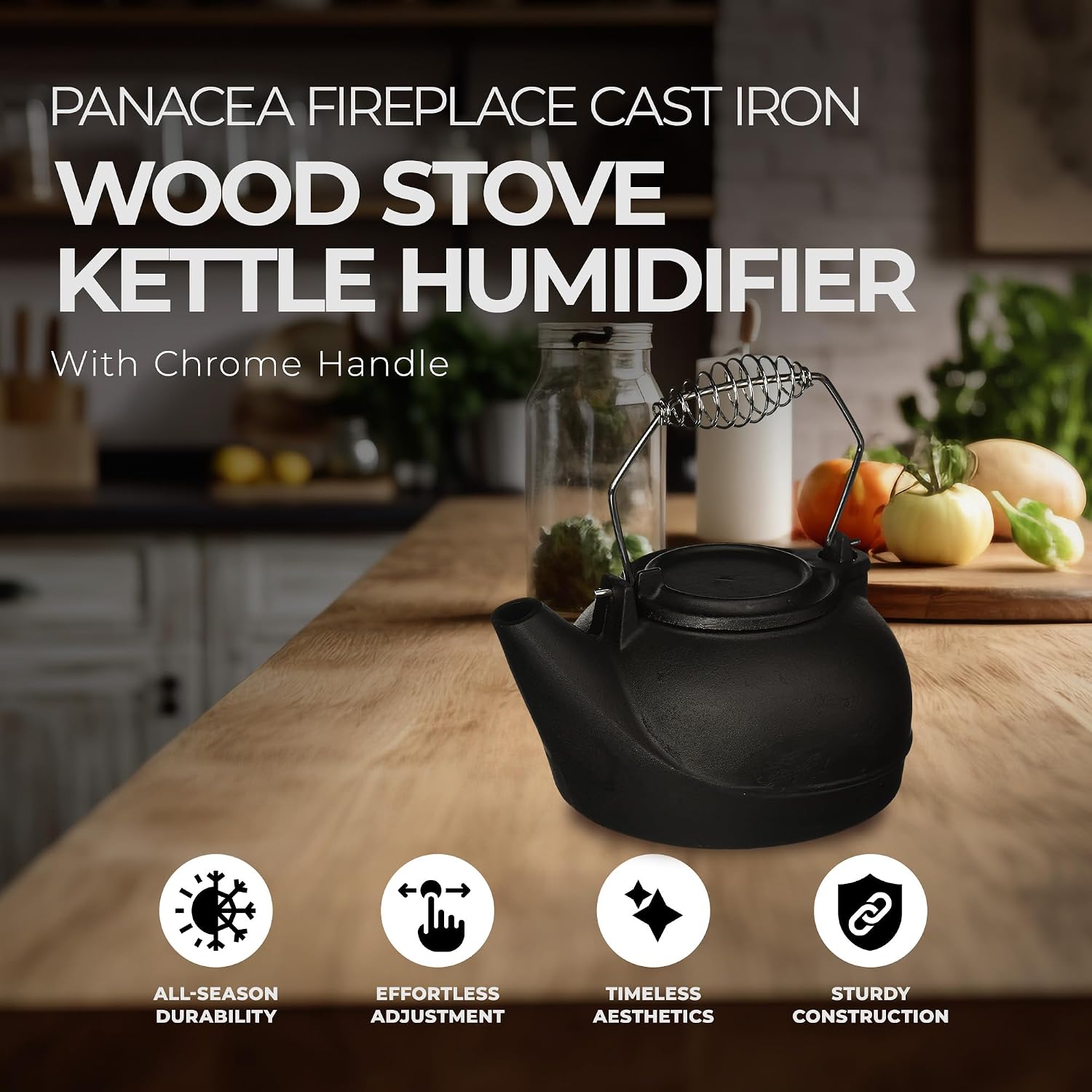
| EDITOR'S PICKAmtrol 110-1 Fill-Trol Expansio… | Mid-tierAMTROL 102-1#30 EX-30 30 Extrol… | Budget pickPanacea Products 15321 Humidify… | |
|---|---|---|---|
| Tank Type | Expansion | Expansion | Kettle |
| Model No. | 110-1 | 102-1#30 | 15321 |
| Capacity | — | 30 | — |
| Series | Fill-Trol | Extrol | — |
| Use | — | — | Humidifying |
| Price | $151.89 | $71.25 | $33.95 |
| See on Amazon → | See on Amazon → | See on Amazon → |
Why the Same-Size Replacement Keeps Failing You
This is the pattern that shows up repeatedly in aggregated contractor feedback and long-run owner reviews: a homeowner or technician pulls a failed EX-30, installs another EX-30, and within a week the relief valve is weeping again. It feels like a defective tank. Usually it isn’t.
The original tank was likely undersized from the beginning — possibly installed by a contractor who defaulted to whatever the plumbing supply house had on the truck, or who applied a rule of thumb that didn’t account for system volume. As long as the original bladder was functional and pliable, the undersized tank could limp along. Once that bladder stiffened and lost compliance, the margin disappeared entirely, and the system pressure problem that was always lurking became visible.
The math that matters:
Proper expansion tank sizing depends on three inputs: total system water volume (gallons), operating temperature rise (from fill temperature to maximum operating temperature), and the system’s fill pressure versus the tank’s acceptance pressure. The ASHRAE Handbook on HVAC Systems and Equipment provides the full Boyles-Law-derived formula; most tank manufacturers — Amtrol and Watts included — publish sizing calculators and nomographs in their engineering guides that make the calculation straightforward if you feed in the right numbers.
A rough rule of thumb: for a residential hot-water system with a conventional boiler running 180°F supply, expect to need roughly 1 gallon of tank acceptance volume for every 20–25 gallons of system water volume. A two-story home with cast iron baseboard and 40 gallons of system water might genuinely need an EX-60 where an installer defaulted to an EX-30.
By the numbers — Amtrol Extrol sizing reference (published spec):
| Model | Total Volume | Acceptance Volume (at 12 psi pre-charge / 30 psi system) |
|---|---|---|
| EX-15 | 2.1 gal | ~0.9 gal |
| EX-30 | 4.4 gal | ~2.0 gal |
| EX-60 | 8.6 gal | ~4.0 gal |
| EX-90 | 14.0 gal | ~6.5 gal |
Acceptance volume — not total tank volume — is what you’re sizing against your system’s expansion volume. These figures are drawn from Amtrol’s published engineering and installation guide; always confirm against the current edition for your specific pre-charge and fill pressure combination.
One documented sequence from owner reviews is illustrative: a reviewer replaced a failed EX-30 with another EX-30 and had the relief valve weeping within days. Stepping up to an EX-60 resolved the problem permanently. That reviewer’s experience tracks exactly with what ACHR News has noted in its coverage of hydronic system troubleshooting — undersizing is the most common expansion tank mistake in residential installations, and it’s made worse by the fact that it often doesn’t manifest immediately.
Bladder Life: What Shortens It and What to Realistically Expect
Bladder longevity is the other half of this conversation. A correctly sized tank that gets a bad bladder in five years is a maintenance headache. Owners of the Watts ETX-30 consistently call out 16-plus years of bladder service life as notable — enough that multiple reviewers specifically mention it as the reason they chose Watts over a competitor. That’s a meaningful data point, and it’s worth understanding what drives it.
Water chemistry is the primary variable. Bladders fail from the outside in — system water is in direct contact with the bladder material on the water side. Acidic or oxygen-rich water degrades EPDM rubber faster than neutral, properly treated water. Plumbing & HVAC’s coverage of water chemistry in cast iron boiler systems consistently emphasizes that pH should be maintained between 7.0 and 8.5, and that oxygen scavengers (products from Fernox, Sentinel, and Rhomar all address this) meaningfully extend rubber component life throughout the system — not just the expansion tank.
High-temperature excursions also stress bladder material. If your system regularly hits 200°F+ because of an oversized boiler or a malfunctioning aquastat, you’re accelerating rubber fatigue. This is less common in well-tuned systems but worth flagging on older systems with intermittent controls problems.
Pre-charge pressure loss is a precursor failure mode that owners sometimes catch before full bladder rupture. The Schrader valve on the air side of the tank — the same type of valve on a car tire — can seep over time. If you check pre-charge annually and find it consistently dropping, the valve core is the first thing to replace; a new core costs under $2 and can restore years of service. Amtrol’s installation guide explicitly recommends annual pre-charge checks; so does Watts’ ETX installation and operating instructions.
The failure indicator on the Amtrol EX-60 deserves a mention here because owners specifically flag it as a discovery rather than a selling-point they knew about before purchase. There’s a visual indicator on the bottom of the tank that signals bladder failure — a useful diagnostic for a component that’s otherwise easy to overlook until the relief valve gets your attention.
A realistic bladder lifespan, given decent water chemistry and proper sizing: 10–15 years is the reasonable center of the distribution. Below-average water quality, chronic oversaturation with oxygen (common in systems that are frequently refilled due to leaks), and temperature excursions can compress that to 5–7 years. The Watts ETX’s 16-year owner reports represent the favorable end of the distribution.
Amtrol vs. Watts: The Decision Frame
Both Amtrol (Extrol and Fill-Trol lines) and Watts (ETX series) are legitimate, well-supported products with long track records in residential and light commercial hydronic applications. The choice is genuinely close, and framing it as a clear winner vs. loser would be dishonest. What the pattern of owner and installer feedback does support is a set of situational preferences.
Choose Amtrol Extrol when:
- You want the widest distributor footprint and the highest likelihood of same-day supply-house availability. The Extrol line is ubiquitous.
- You’re installing an EX-60 or larger and want the visual failure indicator at the bottom of the tank as a diagnostic convenience.
- Your project benefits from modular sizing — the Extrol line covers a very wide range from EX-15 through large commercial sizes with consistent engineering documentation.
Choose Amtrol Fill-Trol when:
- Installation speed matters and you want the combined fill valve / expansion tank assembly that reviewers consistently credit with cutting installation time to under 15 minutes. On a service call where labor billing is per-hour, that’s a real number.
Choose Watts ETX when:
- Long bladder life is the primary concern, particularly on a system with marginal water quality that you can’t fully remediate — the 16-plus-year owner reports are a differentiator here.
- A previous installation used a Flextrol-brand tank (Flextrol bladders have a documented pattern of early failure noted by multiple buyers who switched to Watts specifically after that experience) and the customer or building manager wants a clear upgrade.
- The project is a light commercial or multi-zone residential application where bladder replacement cost matters over a long maintenance contract horizon.
The pre-charge question: Both brands ship tanks pre-charged from the factory — typically at 12 psi for residential tanks. This matches common residential fill pressures (12–15 psi). If your system fill pressure differs — a second-floor zone with higher static head, or a commercial system with elevated fill pressure — you need to adjust pre-charge before installation with the system isolated and the tank off the line. Installing a tank with mismatched pre-charge is a setup for premature failure and is one of the less-discussed reasons tanks “fail early.” Both manufacturers’ installation documents address this clearly.
Can You Run These on a Glycol System?
Propylene glycol antifreeze — used in systems at risk for freeze damage, common in radiant floor applications in unconditioned spaces — is compatible with both Amtrol and Watts bladder tanks, with an important caveat: glycol solutions are denser and have different expansion coefficients than plain water, which affects your sizing calculation. Manufacturers’ sizing nomographs are typically published for water; for glycol mixtures above 30%, you need to apply a correction factor, typically in the range of 1.1–1.2 multiplied against your calculated acceptance volume. Amtrol’s engineering guide addresses this; verify the specific factor for your glycol concentration with the current manufacturer documentation. Bladder material compatibility with propylene glycol is generally confirmed for both brands’ standard EPDM bladders — ethylene glycol (automotive antifreeze) is a different matter and should not be used in hydronic systems at all.
Do You Need to Drain the System for a Swap?
The short answer is: usually not the entire system, but you do need to isolate the tank. Most expansion tanks are installed on a short branch connection with a ball valve (or should be — if yours lacks an isolation valve, add one during this service call). With that valve closed and a bucket ready, you can remove and replace the tank without touching the rest of the system. The Fill-Trol 110-1’s combined assembly is slightly different — because the fill valve is integrated, you’ll be working with the makeup water connection as well — but the principle holds.
If no isolation valve exists and you need to drop system pressure to swap the tank safely, you’re looking at a partial drain-down to get below the tank connection height, not a full system drain. That’s still a manageable job, and it’s the right moment to also flush the low point and check inhibitor concentration if you’re running a treated system.
Frequently Asked Questions
How do I know if my expansion tank bladder has failed or if the pressure relief valve is the actual problem?
Isolate them diagnostically. With the system cold, check the Schrader valve on the expansion tank’s air port: if water squirts out instead of air, the bladder has failed and water has waterlogged the air side. Separately, a relief valve that weeps at normal operating pressure (typically 30 psi in residential systems) but holds when cold points strongly to expansion tank failure, not a defective relief valve. A relief valve that weeps even when cold suggests the valve itself has failed or fill pressure is set too high.
Why did replacing my expansion tank with the same size not fix my pressure issue?
Almost certainly because the original tank was undersized and the new identical tank is equally undersized. The failed bladder was masking a chronic sizing problem. Run the sizing calculation based on actual system volume, fill pressure, and operating temperature — not the nameplate on the old tank.
What is the pre-charge pressure on a new expansion tank and do I need to adjust it before installation?
Most residential tanks ship at 12 psi. If your system fill pressure matches that, no adjustment is needed. If your fill pressure is higher (e.g., 15–18 psi on a taller building), you need to increase the pre-charge to match before connecting the tank to the system. Use a standard tire gauge to check and a bicycle pump or compressor to adjust with the tank off the system.
Can I use an Amtrol or Watts expansion tank on a system with propylene glycol antifreeze?
Yes, with EPDM bladders both brands are compatible with propylene glycol. Adjust your sizing calculation upward — typically a 10–20% correction factor for concentrations above 30% — to account for glycol’s different expansion behavior.
How long should an expansion tank bladder realistically last and what shortens its life?
Ten to fifteen years is a reasonable expectation under good conditions. Water chemistry (low pH, high oxygen content), temperature excursions above design, and mismatched pre-charge pressure are the primary life-shorteners. Annual Schrader valve checks and a properly treated system push toward the long end.
Do I need to drain the entire boiler system to swap out an expansion tank?
No — if a properly sized isolation valve is present at the tank branch (it should be), you can swap the tank without draining the system. If no isolation valve exists, add one now. You may need to reduce system pressure to safely break the connection, but a full system drain is not required.