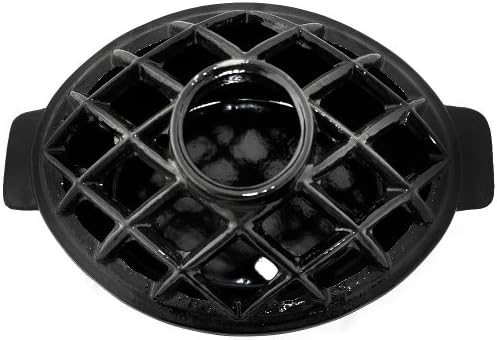
A cast iron steamer — sometimes called a steamer kettle or stove-top humidifier — is a heavy iron vessel you set on a wood stove to evaporate water slowly into the room air. The evaporation adds humidity, meaning water vapor suspended in the air. In a tightly sealed house heated by a wood stove, indoor relative humidity can drop to 20–25% in winter, well below the 35–50% range that ASHRAE identifies in its indoor air quality guidance as the comfort and health target for occupied spaces. A steamer is one of the lowest-tech solutions available. But when you start comparing product listings, you hit a fork immediately: enamel-coated steamers versus raw cast iron steamers. The coating choice sounds minor. For owners with hard water — water carrying a high concentration of dissolved calcium and magnesium — it turns out to be the most consequential specification on the page.
This article works through that choice systematically. It covers what enamel coating actually does (and does not do) to mineral scaling, how raw iron behaves over a real heating season, where the popular figural designs fall short by design, and how to match the right steamer to your water chemistry, stove type, and tolerance for maintenance. The FAQ section at the end addresses the exact questions that appear repeatedly in aggregated buyer reviews.
| EDITOR'S PICKPlow & Hearth Dragon Wood Stove… | Mid-tierPlow & Hearth Pinecone Wood Sto… | Budget pickPanacea Products 15321 Humidify… | |
|---|---|---|---|
| Material | Cast Iron | Cast Iron | Iron |
| Capacity | 2.75 QT | 2.5 QT | — |
| Finish | Matte Black | Matte Black | — |
| Rust Resistant | ✓ | ✓ | — |
| Shape | Dragon | Pinecone | — |
| Decorative | — | ✓ | — |
| Price | $117.99 | $99.99 | $33.95 |
| See on Amazon → | See on Amazon → | See on Amazon → |
What the Coating Decision Actually Buys You — and Where It Stops
Enamel is a glass-based compound fused to iron at high temperature. The appeal for hard-water households is straightforward: a smooth, non-porous surface should give mineral deposits less to grip. In practice, the protection is real — but partial. The boundary where it stops is precisely where the problem starts.
H3: Partial Enamel Coverage and Where It Fails
Owners of enamel lattice-top steamers have documented a specific failure pattern in long-form reviews: the enamel coating terminates at roughly the waterline or at the transition between the decorative outer body and the inner reservoir walls. That is precisely the zone where evaporating water leaves behind concentrated calcium carbonate deposits — the white, chalky scale visible on a kettle heating element. The manufacturer applied enamel to the exterior and the visible interior opening, but not to the interior walls where water sits and concentrates through repeated evaporation cycles.
Family Handyman, in its overview of hard water problems in household appliances titled “Hard Water Problems and Solutions,” describes this scaling mechanism clearly: as water evaporates, minerals that were dissolved in solution are left behind on whatever surface the water last touched. The more aggressive the evaporation rate — and on a wood stove running at 400–500°F surface temperature, a lattice-top steamer can cycle through several refills per day — the faster the mineral concentration builds. Partial enamel coverage in that environment arguably creates a worse situation than no coating at all, because it produces a two-zone interior: a smooth section that resists deposits, and a raw-iron section that accumulates them, making uniform cleaning impossible.
The tradeoff in plain terms: Enamel buys you an easier cleaning surface where it is applied, and a harder mineral problem where it is not. If your water hardness is below roughly 100 mg/L (soft to moderately hard by U.S. Geological Survey classification), the partial coating may be inconsequential across a season. Above 150–180 mg/L — the threshold the U.S. Geological Survey classifies as “hard” — problematic mineral buildup on uncoated interior surfaces is likely within a single heating season.
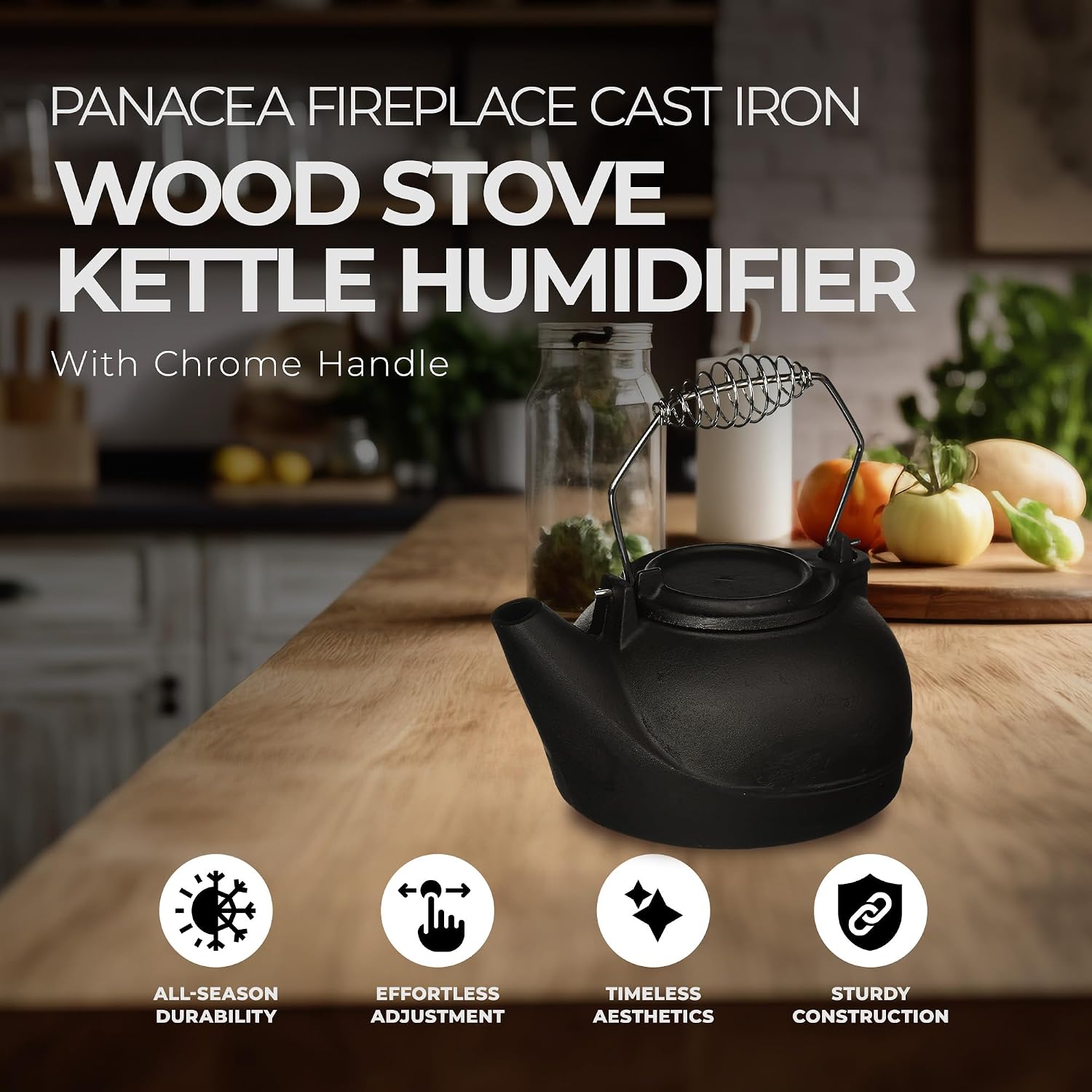
Panacea
$33.95
In stock on Amazon
Check price on AmazonH3: Raw Cast Iron — The Rust Reality and Why Experienced Owners Dismiss It
Raw cast iron steamers — including the full range of figural designs covering bear, moose, pinecone, dragon, and other decorative profiles — carry no enamel protection anywhere. The iron is either bare or lightly oiled from the factory.
The consistent owner observation across aggregated reviews of these products is rust at the lid seam. This appears within weeks of first use as reddish-brown staining along the joint where lid meets body. New buyers often read this as a manufacturing defect. Experienced cast iron owners treat it as iron behaving like iron.
The lid seam on a figural steamer traps moisture. Water vapor condenses at the cooler contact point between lid and body, especially overnight when the stove cools. Surface oxidation at that joint is essentially inevitable in a product designed to hold water over a heat source. This Old House, in its editorial coverage of home humidification methods titled “How to Add Moisture to Your Home in Winter,” notes that cast iron is a reactive, porous material — it does not corrode through rapidly the way unprotected mild steel would, but surface rust is a normal byproduct of the iron-water-oxygen interaction and does not indicate structural failure.
The practical question is not whether rust appears, but whether it affects performance or safety. Across reviewer patterns, the answer is consistent: it does not. The rust remains cosmetic and superficial as long as the steamer is in regular use and water is changed periodically. Letting water sit stagnant in a raw iron vessel for weeks accelerates deeper corrosion — so the management rule is: keep it in use, or keep it dry.
One genuine failure mode on record: A moose-design steamer from one manufacturer had a documented seam separation failure within three days of purchase. That is a casting quality issue, not a category flaw. Notably, the seller’s replacement response in that case was described by the reviewer as immediate — which matters when evaluating purchase risk on figural steamers sold through smaller specialty retailers.
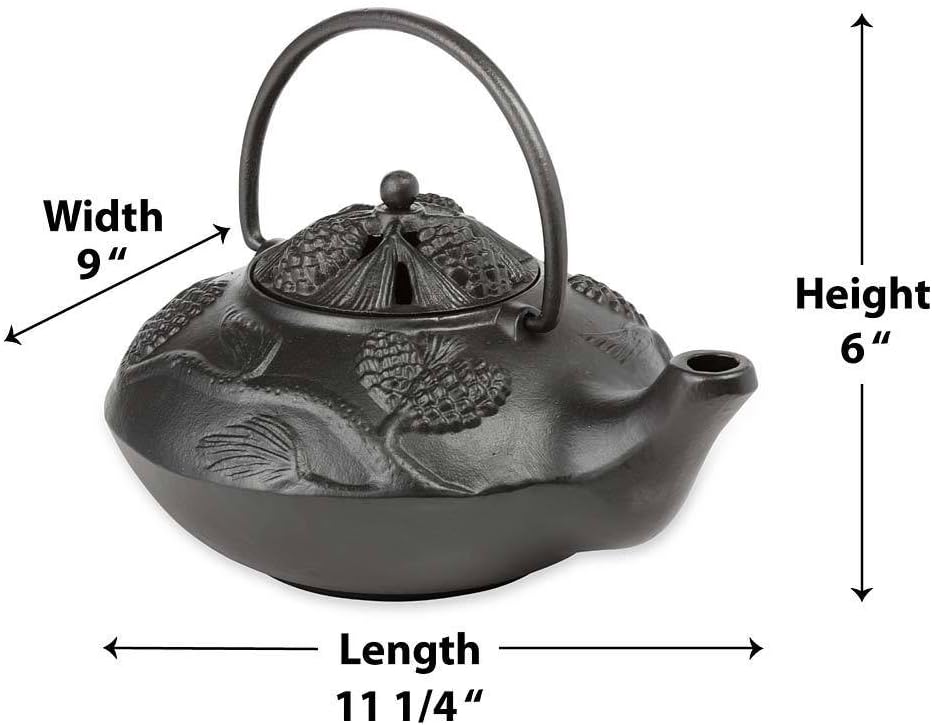
Plow
$99.99
In stock on Amazon
Check price on AmazonH3: Full Enamel Interior Coverage — The Premium Option and Its Limitations
A smaller category of steamers — typically wider, less decorative models — offers full interior enamel coverage, including the submerged walls. These perform better for hard-water households because the scaling mechanism described above has no uncoated iron surface to exploit. However, this category carries its own caveats.
Building Green, in its technical review of passive humidification in tight building envelopes titled “Indoor Humidity and Building Performance,” notes that evaporation rate depends on water surface area, temperature differential, and air circulation — not vessel volume or coating. A fully enameled steamer with a wide, open top will outperform a partially enameled lattice-top steamer on both humidity output and long-term mineral management. The tradeoff: these models are generally less decorative, heavier, and priced higher than figural designs.
Acidic water is an additional concern with full enamel. Repeated exposure to low-pH water — or the addition of citrus juice or vinegar to the fill water — can degrade enamel at micro-crack points over time, particularly in vessels that see daily high-temperature cycling. ACHR News, in 2024 field notes on wood-burning appliance accessories titled “Wood-Burning Appliance Compatibility: What Installers Need to Know,” identifies this as an underreported wear mechanism for enamel-coated stove accessories in households that use acidic scenting additives.
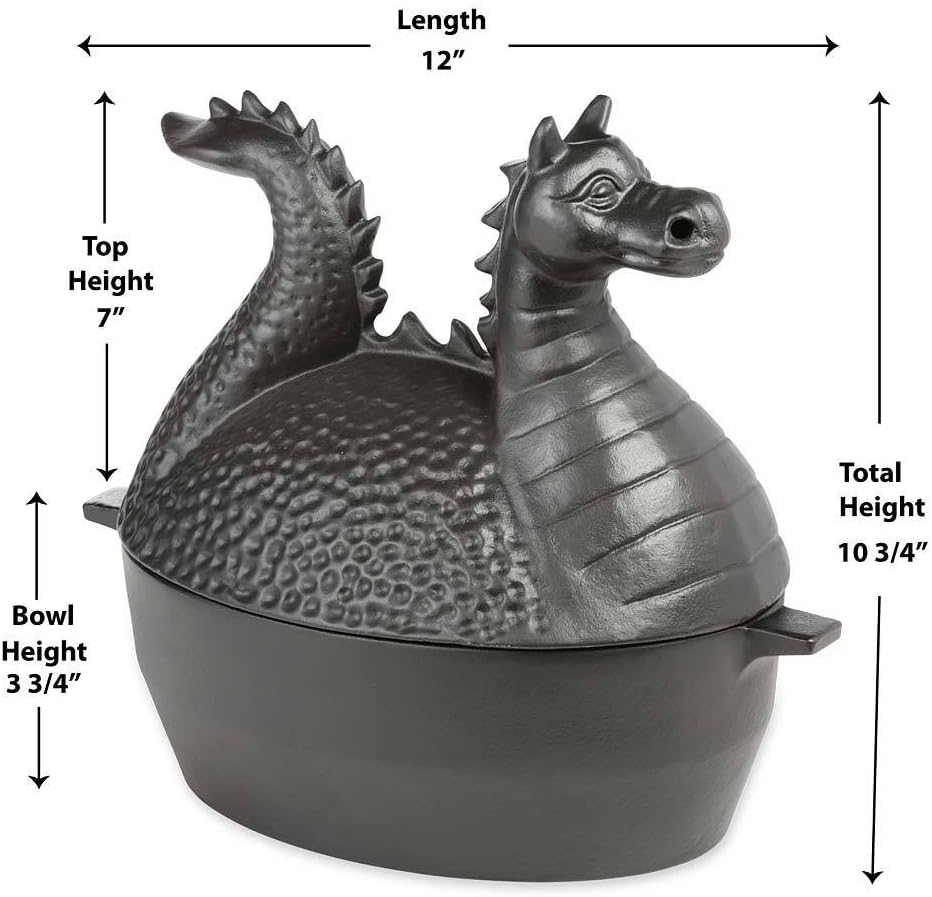
Plow
$117.99
In stock on Amazon
Check price on AmazonSteam Output, Scenting, and Stove Compatibility
Does a 1–2 quart figural steamer move the humidity needle in a real room?
Building Green’s technical review cited above puts the output of small decorative steamers in useful context: evaporation rate is determined by water surface area and temperature differential, not the size of the reservoir. A small-opening figural steamer sitting on a 450°F wood stove surface will produce meaningful but not dramatic humidity output. Owners of pinecone and bear steamers in the 1,200–1,800 sq ft range report noticeable comfort improvement — less static electricity, less dry-throat discomfort — without requiring measurement instruments. In a larger open-plan space above 2,000 sq ft, a single small steamer is unlikely to raise relative humidity from a very dry starting point to the 35% ASHRAE target range. Two steamers, or one larger flat-bottomed model with a wider evaporative surface, perform better in larger volumes.
The dragon steamer’s nose-steam feature: confirmed, but time-dependent.
One owner update on the dragon steamer clarified a detail that matters because the animated steam-from-the-nose effect is a primary purchase driver for buyers with children. Steam does emerge from the nose — but only after an extended warm-up period, not immediately on initial heat. If the stove surface is not yet fully hot, or the steamer has just been refilled with cold water, the pressure needed to route vapor through the narrow nasal passage does not build quickly. Buyers should treat this as an ambient feature that rewards patience, not an immediate effect.
Adding spices: real use case, manageable risks.
Multiple owners of pinecone and bear steamers describe adding cinnamon sticks, cloves, or citrus peel to the water as routine practice. ACHR News’s 2024 field notes on wood-burning appliance accessories note that oil-based seasoning on raw iron is disrupted by repeated exposure to acidic solutions, and that low-acidity aromatics present far less risk than citrus juice or vinegar. The practical rule: cinnamon sticks and whole cloves are widely used in raw iron steamers without reported damage. Citrus juice, orange peel releasing juice into the water, and vinegar-based additions should be avoided in raw iron. For enamel-coated steamers, acidic additions risk micro-etching the glaze at existing imperfections over time, as noted above.
Stove compatibility: wood stove is the design case; others work with caveats.
ACHR News’s installer field notes confirm that figural cast iron steamers designed for wood stoves are safe on gas stove grates and pellet stove tops, with the caveat that pellet stoves vary significantly in surface temperature. Some pellet stoves run surface temperatures below 300°F, which may not sustain vigorous evaporation from a small-opening figural steamer. Gas stoves on high burner settings reach adequate temperatures but require monitoring — a figural steamer can boil dry faster on a responsive gas flame than on a wood stove’s more sustained radiant heat. Never place a cold cast iron steamer on a glass-ceramic cooktop; the weight and thermal mass risk cracking the surface.
By the Numbers: Enamel vs. Raw Iron
| Factor | Enamel-Coated (Partial Interior) | Raw Cast Iron | Full Enamel Interior |
|---|---|---|---|
| Hard water scaling risk | High at uncoated zones | Uniform — manageable with descaling | Low if fully coated |
| Rust at lid seam | Rare on coated exterior | Consistent — cosmetic, expected | Rare |
| Interior cleaning access | Restricted by decorative tops | Generally open, easier to scrub | Depends on opening design |
| Seasoning benefit | None — coating replaces it | Moderate — reduces oxidation | None |
| Acidic additive risk | Moderate — micro-etching over time | Low — strip seasoning, re-season | Moderate — micro-etching |
Frequently Asked Questions
Does enamel coating actually prevent mineral buildup from hard water inside a steamer kettle?
Only where the coating is applied. The recurring owner complaint with enamel lattice-top steamers is that the interior surfaces most exposed to cycling water — the walls below the waterline — are often left uncoated. Mineral deposits accumulate there regardless of the exterior finish. Full interior enamel coverage addresses this; partial coverage creates a two-zone cleaning problem that is harder to manage than uniform raw iron.
How do I season a raw cast iron steamer, and does seasoning the inside help?
Season the exterior and lid seam area the same way you would season cast iron cookware: a thin wipe of flaxseed or vegetable oil, then heat on the stove to bake the oil in. Repeat two or three times before first use. Seasoning the interior is less effective than in a skillet because constant water contact prevents polymerized oil from bonding durably. Exterior seasoning reduces oxidation at the seam and is worth doing consistently. It reduces the rust appearance without eliminating it entirely under normal use conditions.
Will adding cinnamon sticks or cloves to the water damage the cast iron?
Cinnamon sticks and whole cloves are low-acidity additions and are widely used in raw iron steamers without reported damage across reviewer patterns. Avoid lemon juice, orange juice, or vinegar — these are acidic enough to strip seasoning and accelerate oxidation in raw iron, and to degrade enamel at micro-crack points in coated vessels over repeated use.
Is the steam output from small figural kettles enough to make a measurable humidity difference?
In rooms under 1,500 sq ft with a well-burning wood stove, owners consistently report comfort improvement. For measurable change on a hygrometer in larger spaces, a single small figural steamer is generally insufficient. Two steamers, or one with a wider evaporative opening, performs better for larger rooms. ASHRAE’s indoor air quality guidance identifies 35–50% relative humidity as the target comfort range — a small decorative steamer alone is unlikely to reach that floor in a large open-plan space starting from very dry conditions.
Can a cast iron wood stove steamer be used on a gas stove or pellet stove?
Yes, with caveats. Gas stoves work well but require monitoring — the responsive flame can boil a small steamer dry faster than a wood stove’s sustained radiant heat. Pellet stoves vary: confirm the stove top surface reaches at least 300°F before expecting meaningful evaporation from a small-opening figural model. Glass-ceramic cooktops are not compatible with cast iron steamers of any type.
The Decision Rule
If your water hardness is above 150 mg/L and you are drawn to an enamel steamer, inspect the product description carefully for explicit confirmation that interior walls are fully coated. If that detail is absent or ambiguous, assume they are not. Raw cast iron with a periodic descaling routine — a diluted citric acid soak, followed by a re-season — may be easier to maintain over a full heating season than a partially enameled model with inaccessible mineral buildup.
If rust aesthetics are a hard constraint, enamel is your category regardless of water hardness. If you are buying for a wood stove and have a child who wants the dragon’s nose to steam, buy it — but set expectations that the effect requires a fully warmed stove and takes time to appear. If you are on well water with high mineral content and want multi-season service life from a decorative steamer, the raw iron models with wide-mouth openings win on maintainability, even though they require more attention in the first season to develop their surface character.