A cast iron stove steamer is exactly what it sounds like: a heavy cast iron vessel — sometimes shaped like a kettle, sometimes sculpted into an animal or pinecone — that you set on top of a wood-burning stove. The stove’s heat slowly warms the water inside, and that water evaporates into the room, adding moisture to dry winter air. Relative humidity is the measure of how much water vapor the air holds compared to its maximum capacity at a given temperature; indoor air during heating season routinely drops below 30%, and most comfort guides recommend keeping it between 35–50%. Home Energy Magazine, in its guidance on indoor air quality and relative humidity targets for residential occupants, identifies that band as the standard for occupant comfort and reduced static electricity. A stove steamer is a passive, low-tech way to push that number up. This article walks through seven products across two distinct buyer types — decorative figures versus plain utility kettles — so you can calibrate your expectations before committing.
| EDITOR'S PICKPlow & Hearth Moose Wood Stove… | Mid-tierPlow & Hearth Dragon Wood Stove… | Budget pickPanacea Products 15321 Humidify… | |
|---|---|---|---|
| Capacity | 3 QT | 2.75 QT | — |
| Finish | Matte Black | Matte Black | — |
| Rust Resistant | ✓ | ✓ | — |
| Decorative Figure | Moose | Dragon | — |
| Kettle Function | — | ✓ | — |
| Price | $119.99 | $117.99 | $33.95 |
| See on Amazon → | See on Amazon → | See on Amazon → |
The Core Split: Two Buyer Types, One Product Category
Before comparing individual products, it helps to name the fork in the road explicitly, because these two buyer motivations produce two completely different satisfaction profiles.
Decorative figure buyers — the Dragon, the Moose, the Bear, the Pinecone — are primarily purchasing a visual object. The steamer function is real and welcomed, but it is secondary. These buyers accept a price premium for the sculpture value. They’re more tolerant of minor functional shortcomings as long as the piece looks the way it does in the listing. When reviewers describe a Dragon steamer at roughly $110 as “worth it,” they’re almost never making a pure humidity math argument. They’re saying the stove becomes a focal point, the piece draws comments from guests, and the steam rising from a cast dragon’s mouth has an ambiance value that a $30 kettle simply cannot replicate. Aggregated owner reviews on the Dragon steamer show near-universal positive verdicts even from buyers who explicitly acknowledge sticker shock — a signal that the purchase psychology here is closer to décor than to appliance.
Utility kettle buyers are running a different calculation. They want maximum evaporative surface area per dollar, easy filling and emptying, reliable enamel or seasoning that holds up to repeated heat cycling, and no surprises. This group is more sensitive to defects because they have no aesthetic offset to absorb disappointment. When a kettle buyer reports incomplete enamel coverage or a chemical smell on first use, that’s a functional complaint with no consolation prize attached.
Knowing which camp you’re in before you shop eliminates most post-purchase regret in this category.
Decorative Figure Steamers Reviewed
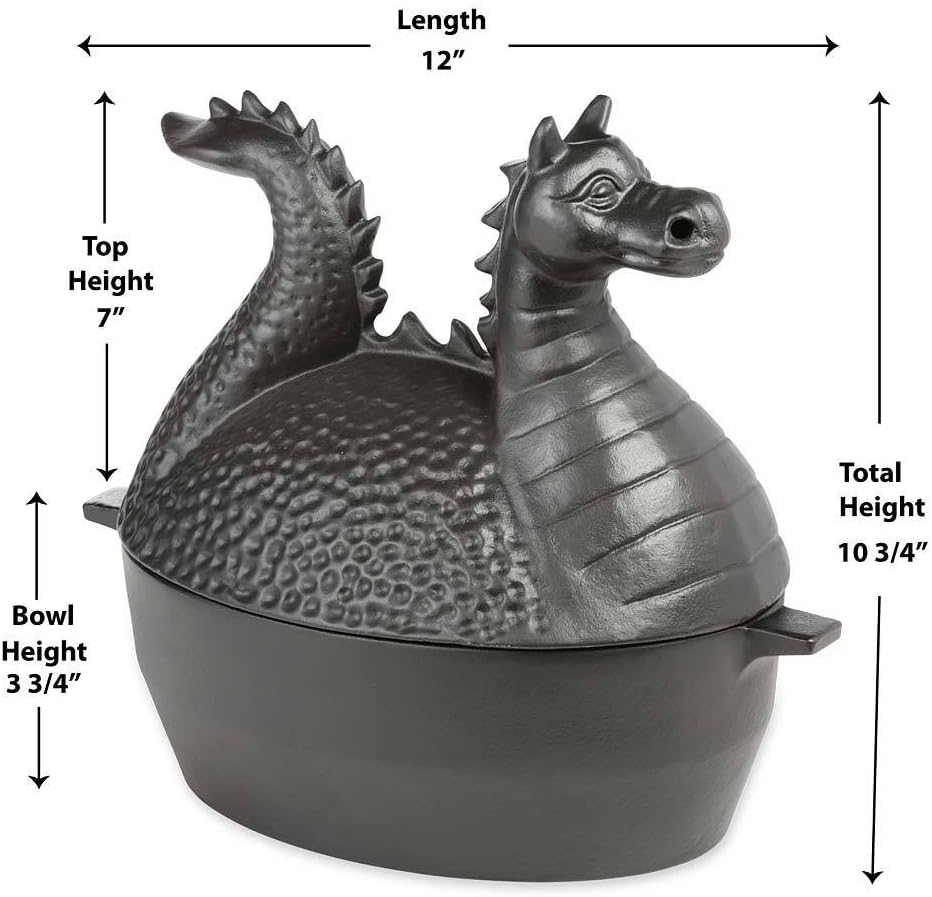
Dragon Steamer (~$110 retail)
The Dragon is the flagship of the decorative tier by both price and visibility. Published specs across retailers describe a capacity in the 1–1.5 quart range, consistent with most figure-format steamers. Owners consistently report that the steam egress points — typically the mouth and nostrils — produce a genuinely visual steam effect at full wood stove operating temperature, not just faint wisps. The humidification contribution is real but modest. This Old House, in its editorial overview of passive and active humidification methods for winter homes, describes single-vessel passive evaporation as a realistic but limited supplement — capable of moving the needle in a well-sealed room while falling short of whole-house impact on its own. Owner reports of 3–7 percentage point gains in relative humidity in reasonably sealed rooms align with that characterization.
The price acknowledgment in reviews is interesting editorial data. A meaningful fraction of Dragon buyers open their review by noting the cost — and then immediately defending it. That pattern is a reliable signal that the value equation here is emotional and aesthetic, not strictly functional. If you need the Dragon to justify itself on humidity output per dollar, it won’t. If you need it to make your stove look like it belongs in a Scottish castle, reviewers suggest it clears that bar convincingly.
Plow
$119.99
In stock on Amazon
Check price on AmazonMoose Steamer — A Quality Flag Worth Naming
The Moose is the product in this roundup with the most significant quality concern surfaced by owner reporting. At least one notable reviewer cluster describes the finish as appearing painted rather than exhibiting the depth and permanence of a true enamel coating, and reports peeling after repeated heat cycling. Building Green’s editorial research on cast iron coatings and enamel durability draws a clear line between vitreous enamel — fused glass particles fired at high temperature and mechanically bonded to the iron — and painted or powder-coated finishes that merely sit on the surface. The latter will not survive repeated exposure to stove-top temperatures in the 300–500°F range that an active wood stove radiates. If you’re considering the Moose, ask the retailer explicitly whether the finish is vitreous enamel or a surface coating — and factor in that owners have reported it does not always hold up to sustained use.
Plow
$117.99
In stock on Amazon
Check price on AmazonBear Steamer — The Safety Note Competing Articles Omit
The Bear steamer has a reviewer-reported safety note that is absent from most product listings and competitor roundups: at least one owner explicitly warns against placing the Bear on a gas stove with an open burner flame, reporting that direct contact with open flame damages the finish in ways that wood stove radiant heat does not. This is worth understanding mechanically. A wood stove top heats by conduction and radiation — the vessel sits on a flat iron surface and heats gradually and evenly. An open gas burner concentrates flame at a point, creates uneven thermal stress, and can reach much higher localized surface temperatures. The Bear’s finish — and likely the finish on most decorative figure steamers — is not rated for direct-flame contact. Family Handyman, in its wood stove accessories roundup, echoes this implicitly by noting that stove-top steamer products are designed for the radiant-heat environment of a solid-fuel appliance, not open-flame cooking surfaces.
If you have a gas fireplace or a gas log set, decorative figure steamers are not the right tool. See the FAQ below for more on this.
Plow
$117.99
In stock on Amazon
Check price on AmazonPinecone Steamer — The Spice-Addition Question
The Pinecone has attracted a meaningful cluster of reviewers who add cinnamon sticks, cloves, or citrus peel to the water for ambient scent. This use case needs a clear-eyed caveat. Cast iron that has not been lined with food-safe enamel is a porous, seasoned surface. Simmering organic material — spices, citrus, anything with natural oils or acids — in an unlined cast iron vessel can degrade the seasoning layer, accelerate interior rust, and potentially carry breakdown products into the steam distributed into your living space. If the Pinecone you purchase is unlined raw cast iron, the spice-addition practice is not advisable for long-term use. If it carries a food-safe vitreous enamel interior, the calculus changes — but verify before you drop cinnamon sticks in. Building Green’s research on enamel coatings in cast iron products provides useful framework for distinguishing food-safe vitreous linings from decorative surface treatments that look similar but perform very differently at temperature.
Panacea
$33.95
In stock on Amazon
Check price on AmazonUtility Kettles: Function-Forward, Defect-Intolerant
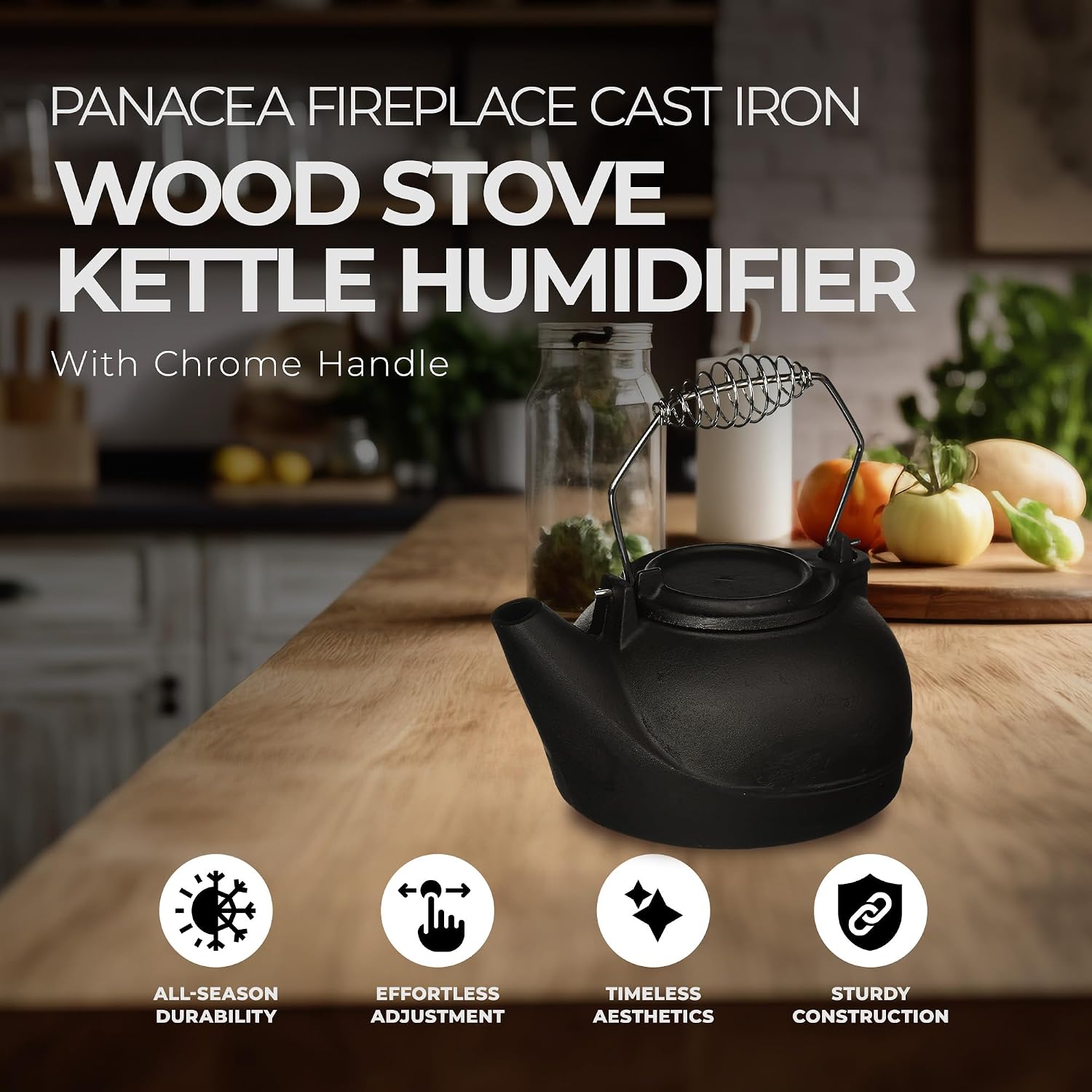
Panacea Kettle — The Chemical Smell Issue Explained
Multiple Panacea kettle reviewers flag a chemical or metallic smell on first use. The uniform finding in those same reviews: it goes away. Home Energy Magazine’s discussion of indoor air quality notes that protective coatings and manufacturing residues on new cast iron products typically volatilize quickly across the first one to three heat cycles — a process that is normal for new appliances and not a durability signal. The standard mitigation is to run the vessel through its first heat cycle outside or in a well-ventilated space, then bring it inside for regular use. Utility kettle buyers who go in knowing this report no ongoing issues after the break-in period.
Functionally, plain kettles have a structural advantage over decorative figures: larger water capacity, a wider mouth for easy filling and interior drying, and — because there’s no decorative sculpting to route steam through narrow passages — better overall evaporative surface area at the water line. If your goal is measurable humidity contribution rather than visual drama, the kettle geometry wins on the physics.
Panacea
$33.95
In stock on Amazon
Check price on AmazonSide-by-Side Comparison
| Product | Approx. Capacity | Finish Durability Risk | Scent-Addition Safe? | Best For |
|---|---|---|---|---|
| Dragon (decorative) | ~1–1.5 qt | Low if vitreous enamel | Not recommended (unlined) | Aesthetic-primary buyers |
| Moose (decorative) | ~1 qt | High (paint/peel risk) | Not recommended | Caution advised |
| Bear (decorative) | ~1–1.5 qt | Moderate; flame-sensitive | Not recommended | Wood stove only |
| Pinecone (decorative) | ~1 qt | Low-moderate | Only if enamel-lined interior | Budget decorative |
| Panacea (utility kettle) | ~2–3 qt | Low (enamel) | Verify interior lining first | Humidity-primary buyers |
Evaporation rate estimates based on surface area geometry and published capacity specs; not independently measured. Finish durability assessments drawn from aggregated owner review patterns and Building Green editorial research on cast iron coating types.
Frequently Asked Questions
Will a cast iron wood stove steamer actually make a measurable difference in home humidity? In a reasonably well-sealed room of 200–400 square feet, yes — owners consistently report 3–8 percentage point gains in relative humidity with a single steamer running on an active wood stove. In a large open-plan space or a drafty older home, the effect is modest and you may need multiple vessels or a powered humidifier to reach the 35–50% range that Home Energy Magazine identifies as the residential occupant comfort target. A stove steamer is a supplement, not a replacement for a whole-house humidifier in leaky or oversized spaces.
Is it safe to add cinnamon sticks or essential oils to a cast iron steamer? Only if the steamer has a food-safe vitreous enamel interior coating. In unlined raw cast iron, organic acids in spices and the alcohol carriers in essential oils can degrade the seasoning layer, accelerate rust formation, and produce unwanted compounds in the steam. Verify the interior finish with the manufacturer before experimenting. If the interior is uncoated iron, stick to plain water.
How do I prevent or manage rust inside a cast iron steamer? Don’t let the vessel sit with standing water when the stove is cold — dump and dry between uses if possible. Re-season the interior periodically with a light coat of flaxseed or food-grade mineral oil wiped in and heated through. Rust that has already formed can be scrubbed with a stiff brush and coarse salt, rinsed, dried thoroughly on a warm stove, and re-seasoned. Vitreous enamel interiors are more forgiving, but even enamel benefits from not sitting wet for extended periods.
Why does my new cast iron steamer smell when it first heats up? Manufacturing residues — protective oils, mold-release compounds, and surface coatings — volatilize in the first few heat cycles. This is normal and consistently reported as temporary across utility kettle reviews. Run the first use in a well-ventilated space. The smell should resolve within two to three sessions.
Can I use a wood stove steamer on a gas fireplace or gas stove? On a gas stove with open burner flame: no. Bear steamer owners document finish damage from direct flame contact, and the thermal stress profile of an open burner is fundamentally different from a wood stove’s radiant heat surface. On a gas fireplace with a sealed glass front: the exterior surface of the glass does not typically reach temperatures sufficient to drive meaningful evaporation — most sealed gas fireplace fronts top out around 150–200°F, well below the 300°F threshold needed for appreciable steam output. A steamer placed on a sealed gas fireplace is primarily decorative at that point, not functional.
How often do I need to refill a steamer on an active wood stove? At full operating temperature (stove top 350–450°F), expect a 1–1.5 quart decorative figure to require refilling every 4–8 hours of active burning. Utility kettles with 2–3 quart capacity can stretch 8–12 hours between fills. In practice, most owners refill once per day during heavy winter use. Use a long-spouted pitcher to add water safely — never lean over an active stove top with a short-handled vessel.
The Decision Rule
If you’re buying a steamer primarily because you want your wood stove to have more visual presence and you’re comfortable treating humidity as a bonus: the Dragon is worth the premium, owners are consistent on that verdict, and the price-acknowledgment pattern in reviews suggests buyers have made peace with the cost. Avoid the Moose until finish durability questions are resolved — the peel risk documented by owners is not a minor cosmetic issue when it occurs on a vessel sitting on a 400°F surface.
If your primary goal is measurable humidity output and you want the best function per dollar: choose a utility kettle with a vitreous enamel interior, verify the interior coating before adding anything but water, and treat the first-use smell as a one-time process step, not a defect signal.
If you have a gas appliance rather than a wood stove: neither category solves your problem well. A powered evaporative or ultrasonic humidifier is the right tool for that environment.