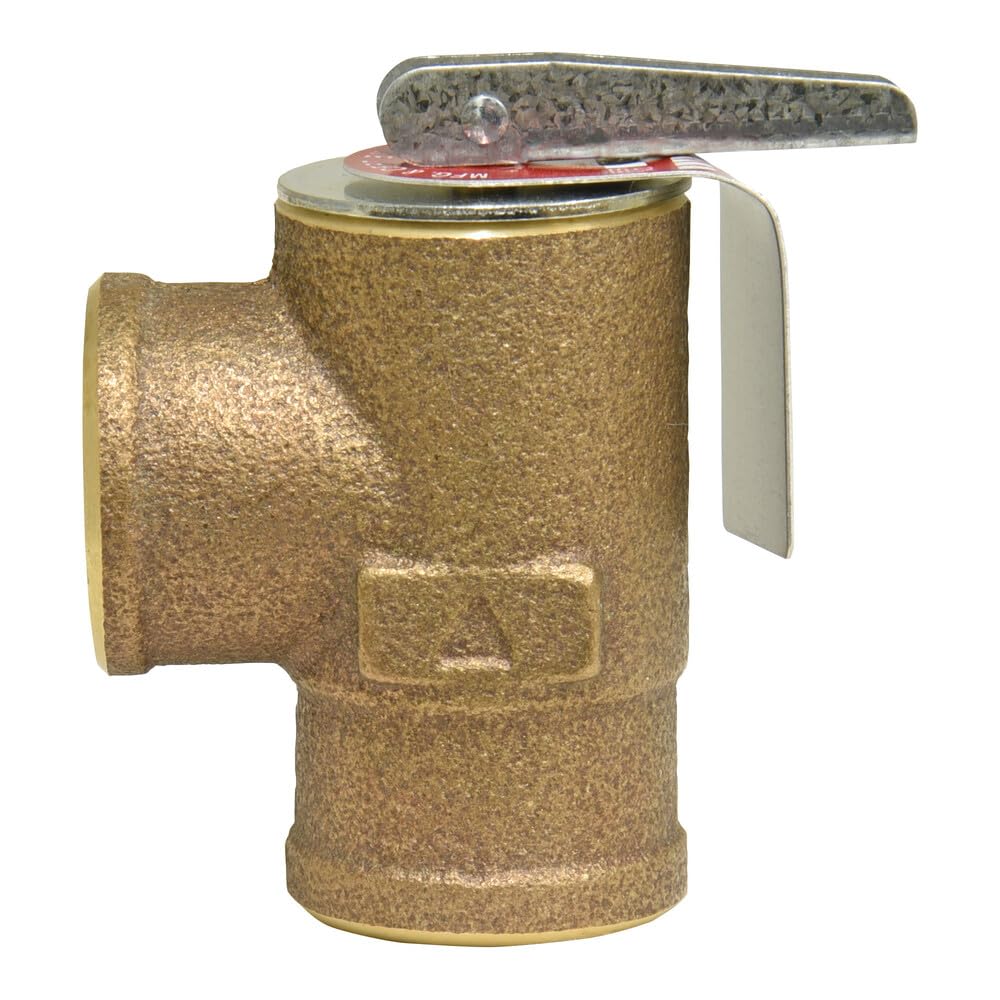
Every hydronic heating system — whether it’s a cast iron boiler heating a century-old brownstone or a gas-fired pool heater keeping a commercial natatorium at temperature — includes one small component that sits quietly until something goes wrong: the pressure relief valve (PRV). A PRV is a spring-loaded safety device that opens automatically if system pressure climbs above a set threshold (almost always 30 PSI on residential boilers) or if water temperature reaches a dangerous level. It’s the last mechanical line of defense before a boiler becomes a very expensive projectile. For most homeowners, a PRV is invisible right up until it starts dripping on the floor — at which point the urgent question becomes: do I replace it, and which brand do I trust? For contractors and building specifiers, the question is more upstream: which valve goes on every job, and why?
This article walks through the two dominant brands in the residential and light-commercial hydronic market — Apollo and Watts — on the dimensions that actually matter at installation time: materials, pressure and BTU ratings, compatibility with cast iron boilers and pool heaters, installation requirements, and what aggregated installer feedback tells us about real-world behavior. The FAQ section at the end covers the safety questions that keep showing up in contractor discussions, because they’re worth answering precisely.
| EDITOR'S PICK[Apollo Valves VLV](https://www.amazon.com/dp/B008835SVW?tag=greenflower20-20) | Mid-tier[Apollo Valves Relief Valve](https://www.amazon.com/dp/B008835PK6?tag=greenflower20-20) | Budget pick[Apollo Valves Water Relief Valve](https://www.amazon.com/dp/B008835PK6?tag=greenflower20-20) | |
|---|---|---|---|
| Set Pressure | 50 psig | 30 psig | 30 psig |
| Size | 3/4" | 3 in | 3/4" |
| Material | BRZ | — | — |
| Thermal Capacity | — | — | 535000 Btu |
| Model Number | 1041710-1 | 1040805-1 | 10-407-05-1 |
| Price | $41.38 | $37.44 | $34.45 |
| See on Amazon → | See on Amazon → | See on Amazon → |
How Apollo and Watts Position Themselves in the Market
Apollo Valves (a brand under the Aalberts Industries family) and Watts Water Technologies are both legitimate industrial manufacturers — not private-label commodity brands. Apollo’s PRV line for hydronic applications is built in bronze, which matters more than most buyers realize on first pass. Watts competes with both bronze and forged brass configurations, with the 374A series (forged brass body) sitting at the top of its residential product tier.
By the numbers — common residential specs:
| Specification | Apollo 36C-150-030 | Watts 174A-030 | Watts 374A-030-FS |
|---|---|---|---|
| Body material | Bronze | Brass | Forged brass |
| Set pressure | 30 PSI | 30 PSI | 30 PSI |
| BTU/hr rating | ~285,000 | ~285,000 | ~336,000+ |
| Inlet size | ¾” | ¾” | ¾” |
| NSF/ANSI listed | Yes | Yes | Yes |
The BTU rating on a PRV — often overlooked by buyers who fixate on PSI — is what determines whether the valve can actually relieve heat fast enough during a pressure event on your specific boiler. More on that in the FAQ section below.
The pricing gap between Apollo’s bronze valve and the entry-level Watts brass models runs roughly $5–$15 at the time of writing, a spread that professional pool service technicians report is decisive when buying valves by the case. Apollo has earned a strong loyalty base specifically among pool heater installers who cite exactly this economics alongside the material advantages discussed below.
Material Differences and Why They Matter on Cast Iron Systems
Apollo Bronze: The Dezincification-Resistant Option
Apollo’s bronze body is an alloy of copper, tin, and small amounts of zinc — chosen for corrosion resistance in wet environments. As reported in Plumbing and HVAC Magazine in coverage of water chemistry and component longevity in hydronic systems, dezincification — the leaching of zinc from brass alloys under certain water chemistry conditions, leaving a porous copper shell behind — is a documented failure mode, particularly in systems with aggressive water pH or elevated chloride content. Bronze’s lower zinc content makes it substantially more resistant to dezincification than standard yellow brass. For installers who encounter systems with unknown or unmanaged water chemistry, this is a meaningful baseline advantage.
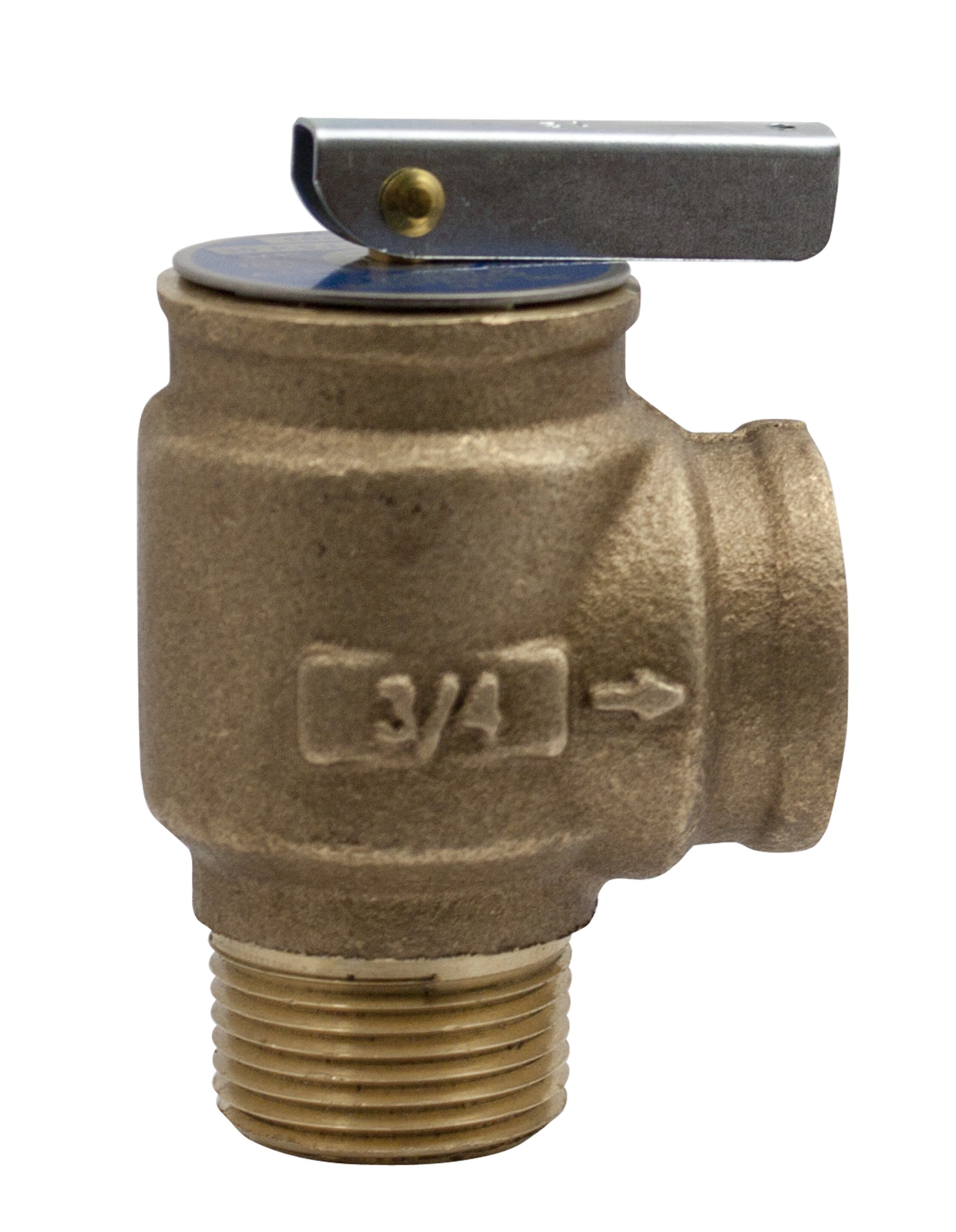
Apollo
$34.45
In stock on Amazon
Check price on AmazonWatts 174A: The Standard Brass Entry Point
Watts’s 174A series is the most widely stocked residential boiler PRV in North American supply houses. Its forged brass inlet on some configurations and ASME listing make it a code-compliant default for standard residential cast iron boiler replacements. On treated hydronic systems — where inhibitors from manufacturers such as Fernox or Sentinel are used — the 174A performs reliably across long service intervals. As the ASHRAE Fundamentals Handbook chapter on Hydronic System Pressure Control notes, water treatment before commissioning is not optional: it directly affects the service life of every wetted component in the loop, including the PRV. On a well-managed system, the 174A’s brass body is not a liability.
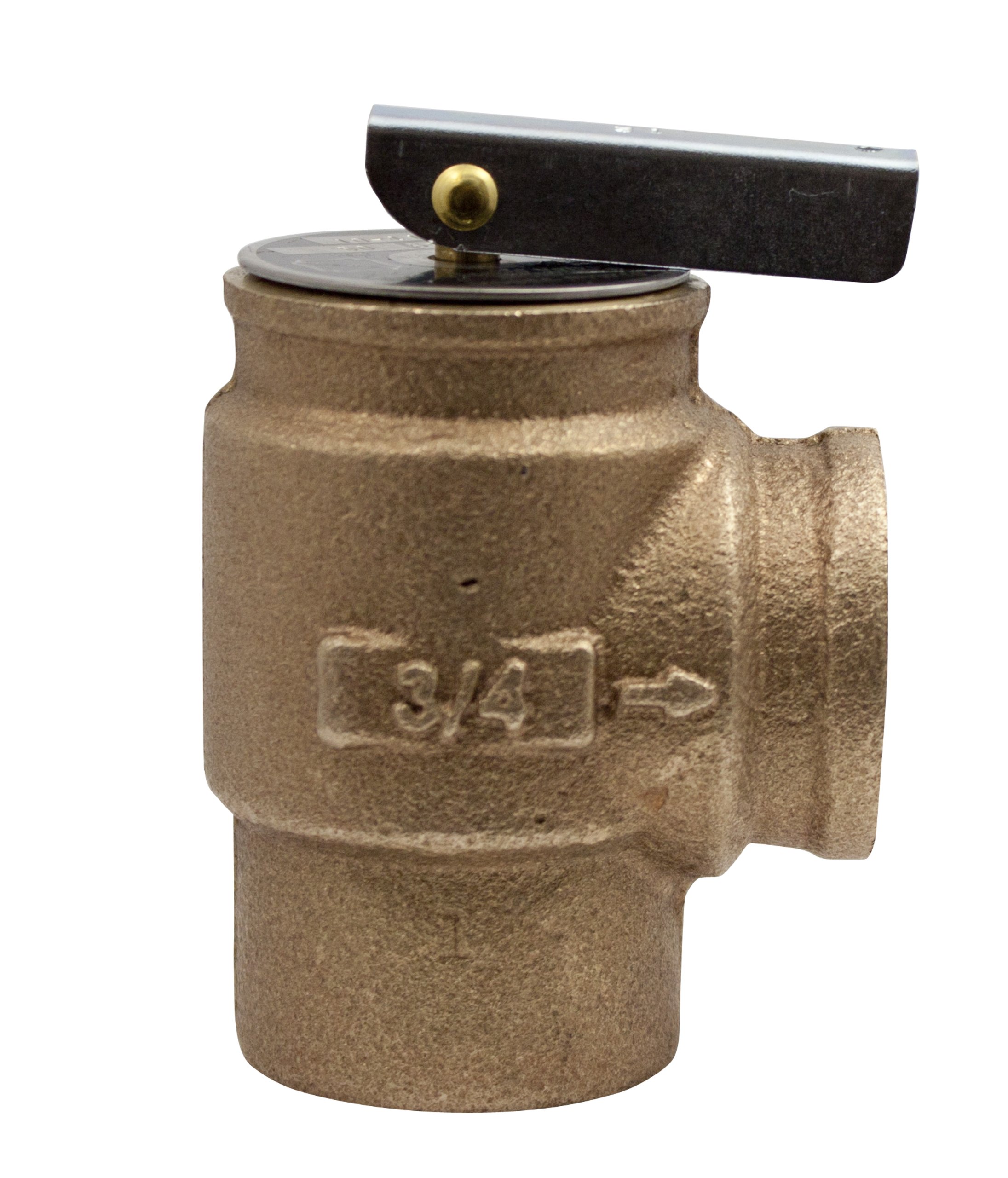
Apollo
$37.44
In stock on Amazon
Check price on AmazonWatts 374A: The Forged Brass Upgrade
Watts’s 374A-030-FS represents a different story from commodity brass. Forging — pressing metal under high pressure rather than casting it — eliminates the microscopic porosity that makes cast brass components vulnerable to both dezincification and pressure fatigue over time. The forged brass body on the 374A delivers a noticeably denser feel and a cleaner seat finish than entry-level alternatives. For residential and light-commercial cast iron boiler applications where the boiler output is at the upper end of the residential range, the 374A’s higher BTU/hr capacity rating also provides useful margin. Watts Water Technologies product data sheets for the 374A series document BTU capacity ratings explicitly for this reason.
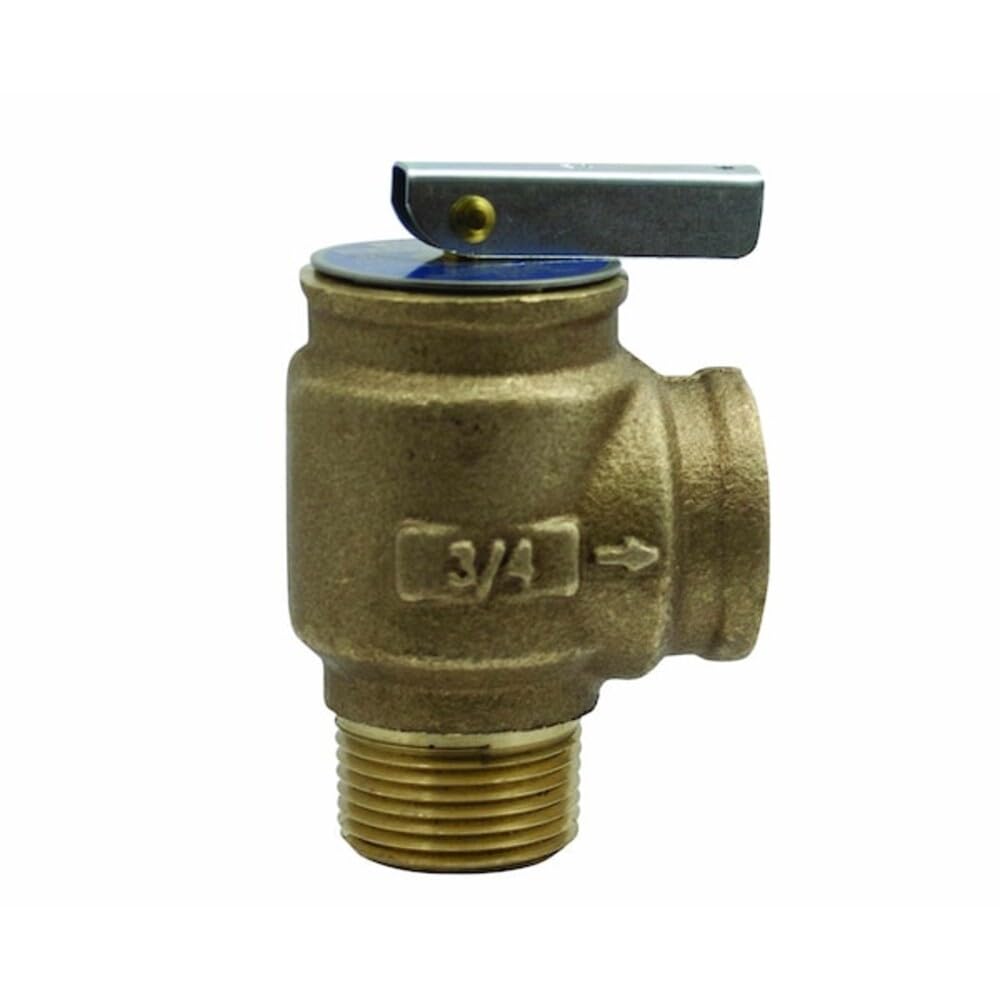
Apollo
$41.38
In stock on Amazon
Check price on AmazonPool Heater Applications: Why Chemistry Drives the Specification
For pool heater applications specifically, bronze has a technical edge that goes beyond general corrosion resistance. Chlorinated water accelerates dezincification in standard brass components. ACHR News coverage of relief valve selection and hydronic system PRV specification identifies material compatibility with water treatment chemistry as an underweighted factor in residential PRV specification, particularly for pool and spa heating equipment where chlorine concentrations are a constant variable — not a periodic excursion. Professional pool service technicians consistently cite Apollo’s bronze construction as the specific reason they specify Apollo over other brands for heater installations. It’s not brand loyalty; it’s chemistry.
For cast iron boilers on treated hydronic systems — where water chemistry is managed with inhibitors — both bronze Apollo and forged brass Watts perform reliably in long-run installer reports. The material difference matters most in untreated or high-chloride water. Plumbing and HVAC Magazine’s coverage of water chemistry and component longevity reinforces this distinction: material selection for pool heater components is a durability decision with measurable consequences, not a cosmetic preference.
Installation Behavior: What Installer Experience Actually Shows
Two patterns from contractor and owner reports deserve explicit treatment because they generate the most troubleshooting confusion.
The Sediment Seat Warning on Watts Valves
One widely-cited installation note — documented in Watts installer guidance and repeated consistently by HVAC contractors — is this: do not cycle the test lever on a newly installed PRV in a system with sediment-laden water. When you lift the lever, you momentarily open the valve seat to full flow. If the water carries sediment (iron oxide from old cast iron sections, magnetite, pipe scale), particles can lodge between the valve disc and seat. The valve then can’t fully reseat, and it drips permanently. The valve isn’t defective; it’s contaminated. The fix is replacement, not repair.
The ASHRAE Fundamentals Handbook’s Hydronic System Pressure Control chapter addresses this indirectly: system flushing and inhibitor treatment before final commissioning directly affects the service life of every wetted component. The sediment seat failure mode is entirely preventable — a flushed and treated system eliminates the particle load that causes it.
The Apollo Post-Lever Drip
On the Apollo side, installers report a different pattern: the valve drips briefly after the test lever is cycled, then self-reseats when the lever is operated a second time. This is normal behavior of the spring-loaded disc design, not a defect. The disc needs a second closure cycle to fully compress against the seat after being disturbed. As documented in the Apollo Valves Technical Bulletin for the Series 36C bronze relief valve line, this behavior is expected and does not indicate a failed valve. Owners who don’t know this conclude the valve has failed and return it — a frustrating and unnecessary outcome.
The Replacement-vs.-Repair Calculus
A recurring theme across installer reports — for both brands — is that technicians arrive at a new PRV only after days of troubleshooting the original valve: cleaning the seat, adjusting the spring, chasing intermittent drips. The consensus is consistent: if a PRV is dripping and the system is more than five years old, the math almost never favors repair. The valve is a $35–$65 part. The diagnostic time and the risk of a contaminated seat reseal cost more. Replace it, flush the system, treat the water, and move on.
Decision Framework: Apollo or Watts for Your Application
Choose Apollo bronze when:
- The application is a pool heater or any system with chlorinated or chemically aggressive water.
- You’re buying in volume and the per-unit cost advantage versus local supply house pricing is meaningful across a full season of work.
- The existing system has unknown water treatment history and you want the more corrosion-resistant base material as a hedge.
Choose Watts 374A forged brass when:
- The application is a residential or light-commercial cast iron boiler on a managed hydronic system.
- The boiler’s BTU output is at the upper end of the residential range and the higher-rated valve provides useful capacity margin.
- The customer or building owner will see the valve and the forged brass finish is a credibility signal worth the incremental cost.
Either brand works reliably when:
- The boiler is a standard residential unit in the 100,000–250,000 BTU/hr range, the system water is treated, and you’re replacing a failed 30 PSI valve on a like-for-like basis. Both Apollo and Watts carry ASME and NSF listings; either is a code-compliant replacement in this scenario.
Frequently Asked Questions
Should I test the lever on a new pressure relief valve after installation, and what happens if it then drips?
The test lever exists so you can verify the valve opens freely — it’s a legitimate safety check. The risk, as noted in Watts installer guidance and widely reported by HVAC contractors, is that sediment in the system water can lodge in the seat during the test cycle, causing a permanent drip. Best practice: flush the system before installing the new valve, treat the water with an inhibitor, and if the valve drips after lever cycling, cycle the lever once more before concluding it’s failed. Apollo owners specifically report that a second lever cycle often reseats the disc cleanly, as described in the Apollo Valves Technical Bulletin for the Series 36C line.
How do I know if my dripping relief valve is actually a failed expansion tank bladder rather than a bad valve?
A waterlogged expansion tank — one where the internal bladder has ruptured and the tank is full of water — can’t absorb the thermal expansion of heating water. Pressure climbs every heat cycle, eventually reaching the PRV set point, and the valve relieves. The valve isn’t failed; it’s doing its job on a system that’s over-pressurizing. Diagnosis: check system pressure cold (should be 12–15 PSI on most residential systems). If pressure is already at or near 30 PSI with a cold boiler, the expansion tank is the likely culprit. Remove the tank, shake it; a waterlogged tank has no air cushion and sounds and feels solid. The ASHRAE Fundamentals Handbook’s Hydronic System Pressure Control chapter covers this diagnostic sequence in the context of system commissioning and ongoing maintenance.
What is the difference between the BTU rating and the PSI rating on a boiler relief valve, and which one matters for my boiler?
Both matter, but for different reasons. The PSI rating (almost always 30 PSI for residential boilers) must match your boiler’s maximum allowable working pressure — this is a code requirement. The BTU/hr rating must equal or exceed your boiler’s input BTU rating — this determines whether the valve can physically relieve heat fast enough during a runaway event. A valve with the right PSI but an undersized BTU rating is a code violation and a safety hazard. Check the boiler nameplate for both numbers before specifying a replacement. Watts Water Technologies product data sheets for the 174A and 374A series document BTU capacity ratings explicitly for this reason.
Can I use Teflon tape alone on a relief valve installation, or is pipe dope also required?
Teflon tape is generally sufficient for tapered NPT threads on a PRV installation, and it’s the cleaner option when you want the ability to remove the valve later without fighting hardened compound. Some installers use a hybrid approach — two wraps of tape plus a light coat of pipe dope on the final thread — for belt-and-suspenders sealing on high-vibration installations. What you should never do is overtighten a PRV trying to compensate for a poor seal: overtorquing distorts the body and can affect valve seating. This caution appears in the Apollo Valves Technical Bulletin for the Series 36C bronze relief valve line and applies equally to the Watts 374A.
Is a 30 PSI Apollo or Watts valve interchangeable with the valve my boiler originally shipped with?
Generally yes, provided the inlet size (almost always ¾” on residential units), set pressure (30 PSI), and BTU rating all match or exceed the OEM specification. Both Apollo and Watts carry ASME and NSF listings, making either a code-compliant replacement in standard residential applications. The one exception: some manufacturers specify a combination temperature-and-pressure relief valve (T&P valve) rather than a pressure-only valve. Confirm the OEM spec before substituting a pressure-only valve on a system that originally used a T&P.
Can the Apollo bronze relief valve be used on a pool heater with chlorinated water without corrosion problems?
Yes — and this is specifically why professional pool service technicians consistently specify Apollo bronze over standard brass alternatives. Bronze’s lower zinc content resists dezincification in chlorinated environments where standard yellow brass would eventually fail. ACHR News coverage of hydronic PRV selection identifies chloride resistance as a primary material selection criterion for pool and spa heating applications. Plumbing and HVAC Magazine’s reporting on water chemistry and component longevity in hydronic systems reinforces that material selection for pool heater components is a meaningful durability decision. Apollo’s bronze body is the right material for this application.