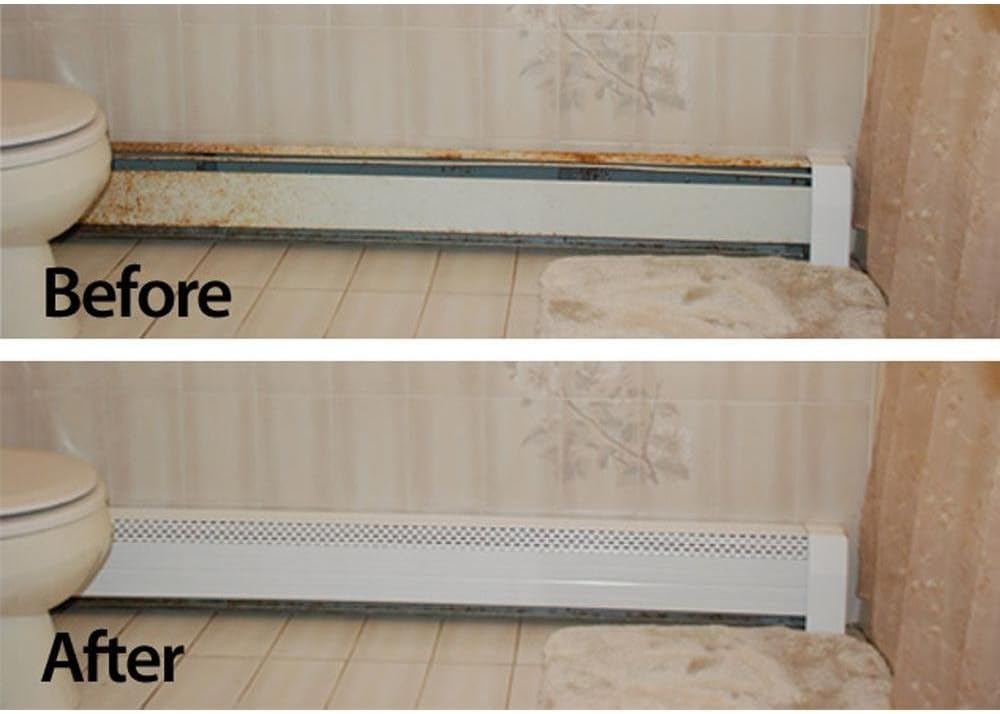
If you’ve got a hydronic baseboard heating system — that’s the type of home heating that runs hot water through metal pipes along the base of your walls, warming rooms by natural convection — chances are the decorative metal cover hiding all of that plumbing has seen better days. Those long rectangular housings are called baseboard covers or baseboard enclosures, and after 15–30 years they develop rust, dents, and a general look of defeat. The good news: you don’t always have to replace the whole heating element. Replacement covers slip or snap directly over existing hardware in an afternoon. The more interesting question — one that reviewers and installers keep arguing about — is whether you want the modern plastic snap-on style (NeatHeat is the dominant brand name here) or the traditional galvanized steel slip-on style. This article maps out every real tradeoff between them so you can make a defensible call, not just a guess.
Why the “Just Get Metal” Default Deserves a Second Look
The conventional installer reflex is to reach for steel. Metal baseboard covers are what contractors have stocked and installed for decades, they look familiar, and no one has ever gotten into trouble specifying them. That reflex isn’t wrong — but it’s not always right either.
Across aggregated buyer reviews of NeatHeat’s plastic covers (particularly the standard 4ft and 6ft SKUs), one scenario repeats with almost eerie consistency: a bathroom, a toilet, boys in the household, and a steel cover that developed rust and an odor problem. Multiple independent reviewers described switching to plastic specifically because the metal enclosure had rusted from repeated moisture exposure and was harboring odors that cleaning couldn’t fully address. This is not an edge case. Bathrooms and powder rooms that share a wall with a baseboard element — particularly in older homes where a single fin-tube run snakes through multiple rooms — are a legitimate failure environment for painted steel.
The practical upshot: steel’s default advantage (rigidity, thermal familiarity, paintability) is most relevant in dry, visible living spaces where appearance is paramount and moisture isn’t a recurring factor. Plastic’s case is strongest in high-humidity, hard-to-clean environments where the steel cover’s long-term maintenance burden is the real cost.
This Old House, in their buyer guidance on baseboard heater covers, notes that cover selection should account for room-specific conditions — not just aesthetics — and that moisture resistance is a legitimate functional criterion, not merely a cosmetic preference.
The Thermal Conductivity Question: Does Plastic Actually Lose Heat?
Here’s the technical objection you’ll hear most often against plastic covers: plastic is a thermal insulator, not a conductor, so a plastic enclosure must reduce heat output compared to steel.
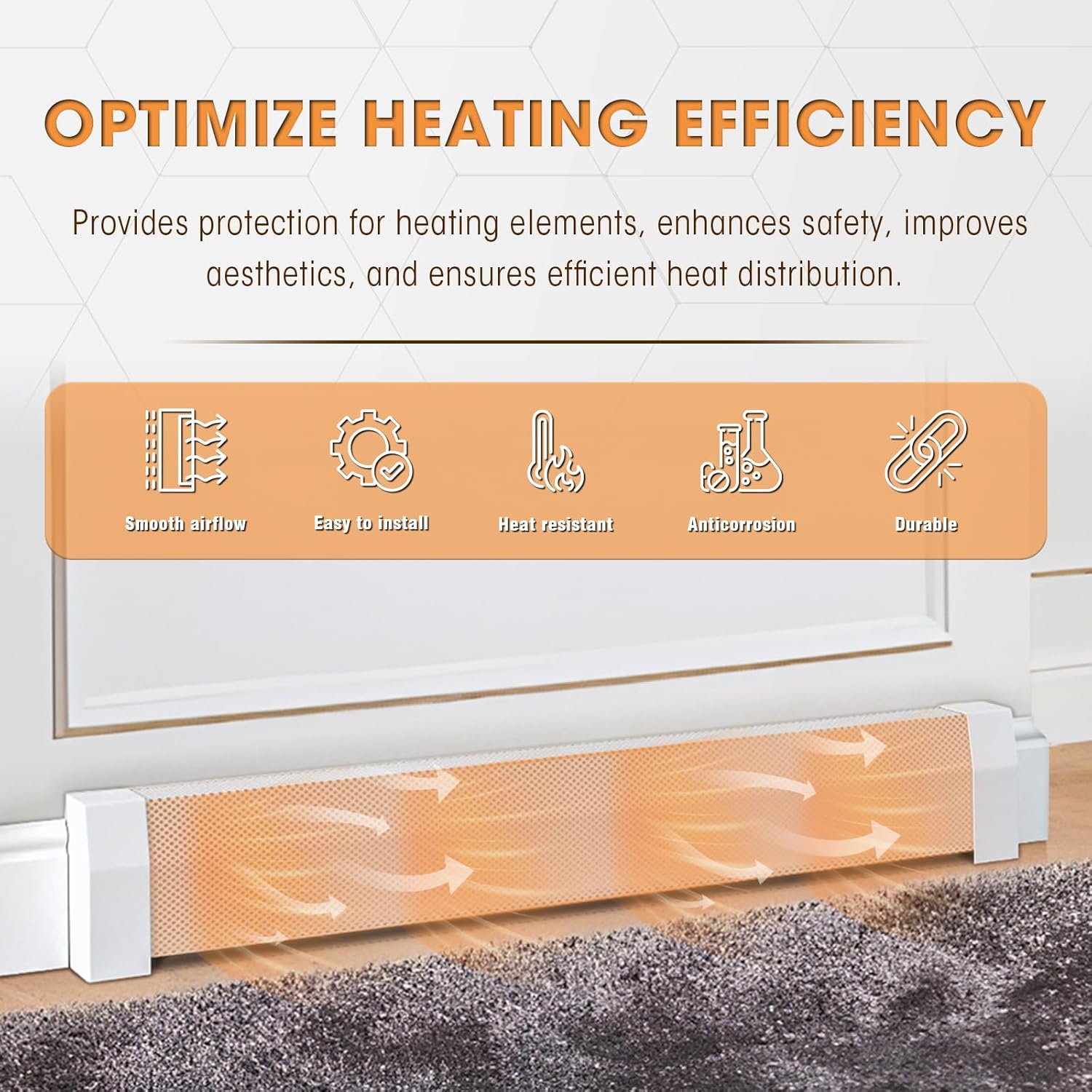
The nuance matters here. Baseboard hydronic heating works primarily by convection — cool room air enters through slots at the bottom of the cover, passes over the hot fin-tube element, and rises out through slots at the top. The cover is not a heat radiator in the primary sense; it’s a convection channel. Steel covers do conduct some supplemental radiant heat through their surface, and that fraction is real. But HPAC Engineering, in their published coverage of fin-tube convector performance, consistently notes that enclosure geometry — slot sizing and airflow path — matters far more to convective output than the enclosure material’s conductivity.
One detailed reviewer in the NeatHeat listings put this plainly: metal’s only functional advantage is thermal conductivity, but the actual heat transfer mechanism in a properly slotted enclosure is dominated by airflow, not conduction through the cover walls. The delta in real-world room heating performance is small enough that most homeowners report no perceptible change in how long their thermostat cycles run after switching cover materials, provided the slot pattern is equivalent.
The practical call: if you’re specifying for a high-output zone where squeezing maximum BTU delivery out of a shorter fin-tube run is genuinely critical — commercial lobby, large open living area with generous glass — steel is the conservative choice. For standard residential zones with normally-sized fin-tube elements, the conductivity difference is not a sizing decision driver.
Head-to-Head: Three Scenarios Where Each Cover Type Wins
Scenario 1 — High-Humidity Rooms (Bathrooms, Laundry Areas)
NeatHeat
$39.98
In stock on Amazon
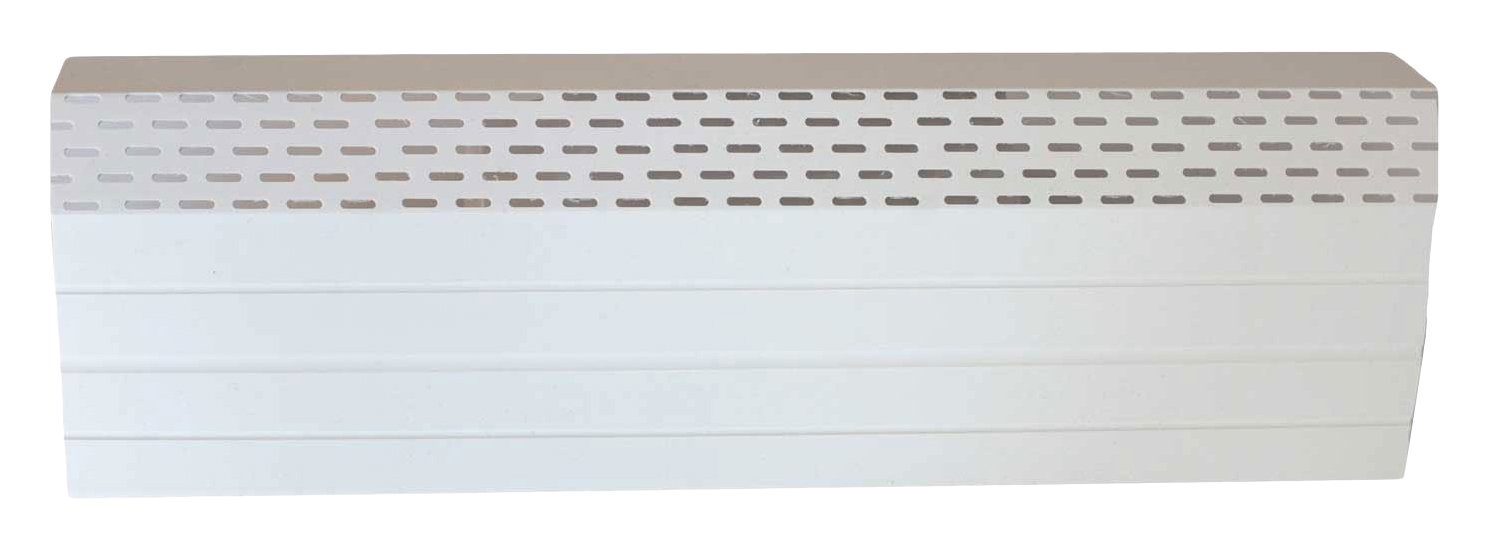
Check price on AmazonIn bathrooms and laundry areas, the failure mode for painted steel is rust and odor accumulation from chronic moisture exposure. This is documented repeatedly across NeatHeat buyer reviews and is not a fringe condition — it’s the environment most responsible for homeowners abandoning steel mid-lifecycle. Plastic snap-on covers carry a corrosion resistance advantage that is structural, not cosmetic: there is no coating to chip, no bare metal underneath waiting to oxidize. Cleanability is also superior; smooth plastic surfaces wipe down more completely than textured painted steel, which matters in hygiene-sensitive spaces.
For this scenario, plastic snap-on is the clear winner. The thermal conductivity tradeoff is negligible when the heating load in a bathroom is modest, and the moisture resistance advantage is durable over the full product lifespan.
NeatHeat
$39.98
In stock on Amazon
Check price on AmazonScenario 2 — Open Living Areas, Kitchens, and Visible Design Spaces
*TALL*NeatHeat
$48.43
In stock on Amazon
Check price on AmazonReviewers who chose galvanized steel slip-ons describe a fundamentally different project than the plastic-cover crowd. They’re doing a full cosmetic replacement — pulling the old cover off, sliding on a new steel housing, and achieving a clean, factory-fresh look in a kitchen or open-plan living area where the baseboard is a visible design element.
Steel covers accept standard metal primer and finish paint, which matters in spaces where the homeowner wants the cover to blend precisely into a custom wall color. This Old House and Family Handyman both treat paintability as a core steel advantage, noting that a properly primed steel cover takes latex or oil-based paint cleanly and holds the finish well under normal household conditions. Plastic surfaces require adhesion-promoting primer formulated specifically for plastics, and even with correct prep, paint adhesion on flexible plastic enclosures can fail under heat cycling. If precise color matching is a priority, steel is the more reliable choice.
Steel also wins on rigidity and perceived quality in commercial and light commercial settings. Building specifiers working through renovations of light commercial space — a medical office, a retail storefront — often find that plastic covers read as residential and budget-grade in environments where that distinction matters to clients.
*TALL*NeatHeat
$48.43
In stock on Amazon
Check price on AmazonScenario 3 — Existing Rusty Cover, Fast Install, No Demolition
5ft
$74.39
In stock on Amazon
Check price on AmazonOne of the more underappreciated use cases for plastic snap-on covers is the cover-over install: NeatHeat covers are explicitly designed to snap directly over existing covers without removal, cutting labor time significantly. If the existing cover is rusty but structurally present — not severely buckled, not deformed enough to create major height irregularities — a plastic snap-on goes directly over it. No removal, no patching, no painting the wall behind where the old cover used to sit.
For a homeowner doing a multi-room refresh where the primary goal is eliminating visible rust and odor without a full teardown, this installation path is a genuine time and cost advantage. Steel slip-on covers, by contrast, typically require removing the old housing first to achieve a clean fit, which adds labor and can reveal wall condition issues behind the original cover.
ACHR News guidance on hydronic baseboard maintenance consistently flags cover condition inspection as part of routine service — and the ability to cover-over rather than remove is a legitimate efficiency factor in residential retrofit work.
5ft
$74.39
In stock on Amazon
Check price on AmazonSide-by-Side Comparison Table
| Factor | Plastic Snap-On (NeatHeat) | Galvanized Steel Slip-On |
|---|---|---|
| Moisture / rust resistance | Excellent — no corrosion | Moderate — bare or painted steel rusts under sustained humidity |
| Thermal conductivity | Low (plastic ~0.2 W/m·K) | High (steel ~50 W/m·K) |
| Primary heat transfer mode | Convection (dominant) | Convection + minor surface radiation |
| Paintability | Limited / uncertain — requires plastic primer, heat cycling risk | Straightforward with metal primer |
| Install over existing cover | Yes — designed for cover-over | No — typically requires old cover removal |
| DIY install complexity | Snap-on, no tools required | Slide-and-screw, minor fitting |
| End caps included | Generally yes, per SKU | Varies by manufacturer — confirm before ordering |
The Tall Variant Problem: Measure Twice, Order Once
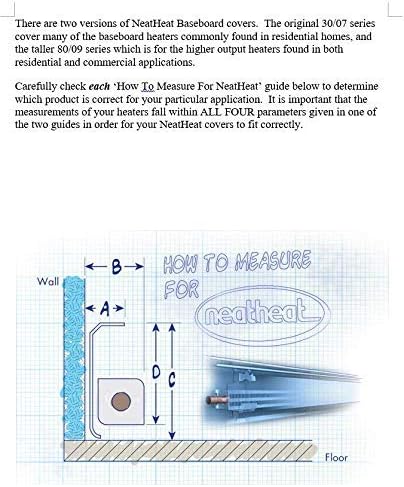
NeatHeat’s tall variant — designed for installations where the original baseboard element sits higher off the floor than a standard cover will accommodate — generates a consistent, repeated warning across multiple independent reviewers: measure carefully before ordering.
The standard NeatHeat cover assumes a specific fin-tube element height and floor-to-element-bottom clearance. The tall variant adds height to accommodate elements that sit higher. Multiple reviewers flagged sizing errors, specifically receiving covers that didn’t fit because they measured the old cover rather than the actual element dimensions, or because they didn’t account for floor height variation across a long run.
Family Handyman’s guidance on baseboard heater cover replacement recommends measuring the fin-tube element height directly — not the existing cover — noting the floor-to-bottom-of-element clearance, and cross-referencing against the manufacturer’s fit guide before ordering any cover that deviates from a standard profile. For tall NeatHeat variants specifically: measure the element, not the enclosure, and add the floor clearance separately. Don’t assume the existing cover is the right reference point, especially if it was installed by someone else.
Decision Framework: If X, Then Y
If the install is in a bathroom, laundry area, or any high-humidity environment with a history of rust or odor on the existing cover → choose plastic snap-on. The rust resistance is a functional advantage. The thermal conductivity tradeoff is negligible in these applications.
If the install is in an open living area, kitchen, or commercial space where appearance is a primary deliverable and the client expects a paintable, metal finish → choose galvanized steel slip-on. Steel’s paintability and visual weight are genuine advantages here, and the moisture exposure that hurts steel long-term is unlikely in these environments.
If the existing cover is rusty but structurally present and the homeowner wants a fast, no-removal install → plastic snap-on goes directly over it. This cuts labor time significantly and avoids wall-condition surprises behind the old cover.
If you’re ordering the tall NeatHeat variant → measure the element, not the old cover, and verify floor clearance separately. Sizing errors on this variant are the single most documented failure mode in buyer reviews, and they’re entirely avoidable with one additional measurement step.
If your steel slip-on quote doesn’t explicitly include end caps → price them separately before finalizing the estimate. As ACHR News contractor guidance on hydronic baseboard work notes, end caps are a line-item that gets missed in first-time material estimates. Some steel slip-on kits include them; others do not. Confirm before committing to a SKU on a multi-room job.
Frequently Asked Questions
Can I install NeatHeat covers directly over rusty metal baseboard covers without removing them? Yes — this is one of NeatHeat’s explicitly marketed use cases, and reviewers confirm it works. The plastic snap-on covers are designed to fit over existing metal enclosures. That said, if the existing cover is severely buckled or has significant height irregularities, it can affect how cleanly the new cover sits. Inspect the existing cover for major deformation before relying on a cover-over approach.
Do plastic baseboard covers reduce heat output compared to metal? In practice, the reduction is small enough that most homeowners and installers report no perceptible difference in thermostat cycling or room temperature. The dominant heat transfer mechanism is convection through the cover’s slot geometry, not conduction through the cover material. HPAC Engineering’s published work on fin-tube convector performance establishes that enclosure geometry matters far more than material conductivity for convective output. For high-demand zones, steel is the conservative choice; for standard residential applications, the material difference is not a sizing factor.
Can I paint NeatHeat or similar plastic covers to match my wall color? Results are not guaranteed. Plastic surfaces require adhesion-promoting primer formulated for plastics, and paint adhesion on flexible plastic enclosures can fail under heat cycling. If precise color matching is a priority, steel is the more reliable choice. If you’re committed to painting plastic, use a flexible plastic primer and test on a small section before committing to a full run.
How do I measure for the tall NeatHeat variant vs. the standard height? Measure the height of the fin-tube element itself — not the existing cover — and note the clearance from the floor to the bottom of the element. Multiple reviewers flagged errors from measuring the old cover instead of the element directly. Family Handyman’s baseboard heater cover replacement guidance recommends going to the element as your reference point and cross-checking against the manufacturer’s fit specifications before ordering any non-standard profile.
Do steel slip-on covers come with end caps, or do I need to buy those separately? This varies by manufacturer and SKU. Some steel slip-on cover kits include end caps; others do not. Before finalizing any steel cover order for a multi-room job, confirm end-cap inclusion explicitly — or budget for them as a separate purchase.
What is the best baseboard cover option for a bathroom near a toilet? Based on the pattern across multiple independent reviewer accounts, plastic snap-on covers are the stronger choice for this specific environment. The recurring scenario in NeatHeat reviews — metal cover developing rust and odor from moisture exposure near a toilet — is a documented failure mode that plastic avoids entirely. The thermal conductivity argument for metal is real but minor in a bathroom where the heating load is modest. Moisture resistance and cleanability are the functional criteria that matter most in this application, and plastic wins both.